In this guide
Most people who want to maximize storage in a small kitchen assume they need more cabinets, a bigger footprint or a remodel. Usually they don’t. In most small kitchens the problem isn’t a lack of space. It’s that the space you already have is hard to reach, poorly grouped or buried under things you rarely use.
Crowded counters, deep cabinets where pans disappear, a jammed pantry and a messy cabinet under the sink can make even a well-laid-out kitchen feel cramped. The fixes below work with your existing cabinets, sink and layout. No contractor, no demolition, and most of them cost little or nothing.
Key Takeaways
- ✓The fastest way to maximize storage in a small kitchen is to fix access, not add space: deep cabinets, corners and the area under the sink hide the most usable room.
- ✓Measure every cabinet (width, depth, height, hinges and pipes) before buying any organizer.
- ✓Store items where you use them: prep tools by the counter, pans by the range, dish soap by the sink.
- ✓Keep only daily-use items on the counter, and give everything else a set home.
- ✓A five-minute reset after cooking keeps the system working long after the weekend you set it up.
Why Small Kitchens Run Out of Storage
Before you buy a single bin, it helps to know where storage actually gets lost. In most compact kitchens it comes down to three things:
- Dead space: the back half of deep base cabinets, blind corners and the gap above shelves that are spaced too far apart.
- No system: items live wherever they fit instead of where they’re used, so the same cabinet holds baking pans, cleaning spray and the slow cooker.
- Counter creep: appliances and gadgets settle on the worktop because they have nowhere else to go, leaving little room to prep.
Each of the ideas below targets one of these problems. If you’d like a broader look at freeing up floor and counter space too, see our guide to creating more space in your kitchen.
10 Ways to Maximize Storage in a Small Kitchen Without Renovating
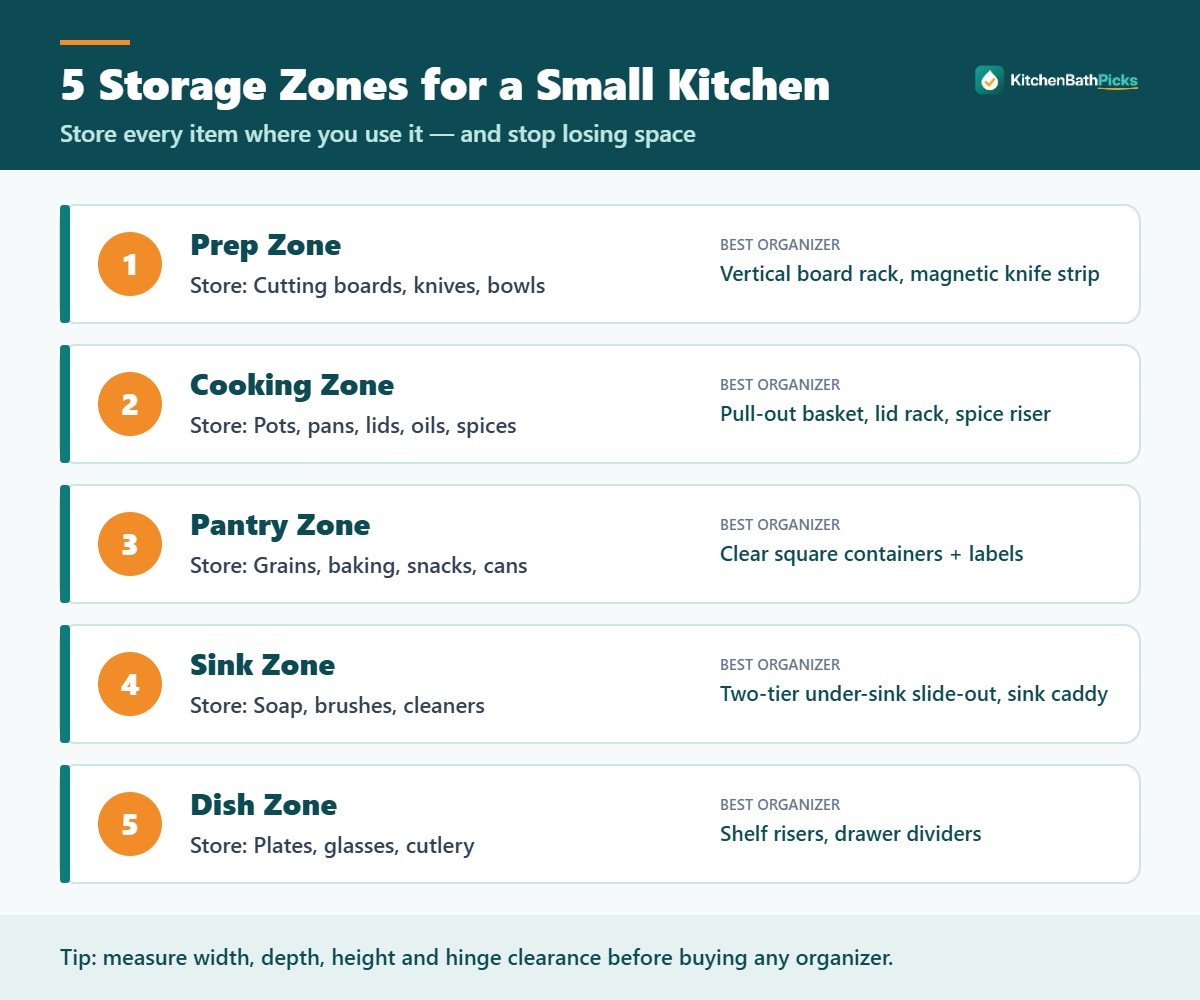
1. Start With a Zone-by-Zone Storage Audit
Spend fifteen minutes looking at your kitchen in zones rather than as one big problem. Open every cabinet and drawer and note what frustrates you in each area:
- Prep area (cutting boards, knives, mixing bowls)
- Cooking area (pots, pans, utensils, oils and spices)
- Pantry and dry goods
- Sink and cleaning supplies
- Everyday dishes, glasses and cutlery
You may find you have enough cabinet space but can’t reach what’s at the back, or that your counters are crowded only because a few daily tools have no home. Fix the biggest frustration first. When you want to maximize storage in a small kitchen, solving the main bottleneck stops you from buying organizers you don’t need.
2. Use Vertical Space Instead of Counter Space
Small kitchens usually have more height than they use. Tiered spice risers, stackable shelf inserts and wall-mounted holders put that height to work. Inside cabinets, a simple shelf riser can turn one tall stack of plates into two short, easy-to-grab stacks of plates and bowls.
On open walls, a rail with hooks or a narrow floating shelf holds oils, utensils and mugs off the counter. Our guide to open shelving in the kitchen covers how to keep visible storage looking tidy rather than cluttered.
The rule is simple: go vertical, but keep heavy and everyday items between shoulder and knee height so nothing is awkward or unsafe to reach.
3. Organize by Activity Zones
A kitchen that matches the way you cook needs less storage, because nothing is duplicated and nothing travels far. Group items by job:
- Cutting boards, knives and prep tools next to your main work surface
- Pots, pans and lids in the base cabinet closest to the range
- Oils, salt and everyday spices within reach of the stove, but not directly above it where heat degrades them
- Plates, glasses and serving pieces near the dishwasher or dining area
- Dish soap, brushes and towels at the sink
Once each zone has its own home, unrelated items stop competing for the same cabinet. It’s one of the simplest ways to maximize storage in a small kitchen, because you stop storing the same tool in two places.
4. Make Deep Base Cabinets Easy to Use
Deep base cabinets are where storage goes to hide. Anything behind the front row is out of sight and a pain to reach, so it gets forgotten. Two fixes help:
- Bins with handles: group similar items (baking sheets, food storage containers, small appliances’ accessories) in a bin you can slide out as one unit.
- Pull-out organizers: sliding baskets or roll-out shelves bring the back of the cabinet to you. Many install with screws and no cabinet modification.
Pro Tip: Measure twice, buy once
Before you order a pull-out organizer, measure the inside width at the narrowest point (usually the face frame or hinges), the depth, and the height. Then check door clearance and any pipes or drawers that could block the slide. An organizer that doesn’t fit creates more frustration than the original problem.
5. Organize the Pantry With Clear Categories
A crowded pantry makes a small kitchen feel even smaller. Pull everything out and sort dry goods into a few practical groups, such as baking, grains and pasta, snacks, breakfast, and cans.
- Use clear, square or rectangular containers. They stack better and waste less shelf space than round ones.
- Label containers, and add the expiration date when you decant food.
- Put the things you use most at the front and at eye level.
- Keep heavy items like flour, rice and canned goods on lower shelves.
- Review the pantry monthly and use up older items first.
Choose containers based on your shelf depth and height, not looks alone. A well-sorted pantry is often the quickest win when you’re trying to maximize storage in a small kitchen. If you’re unsure how long dry goods keep once opened, the USDA’s FoodKeeper guide is a reliable reference.
6. Reclaim the Space Under the Kitchen Sink
The sink cabinet is often the messiest spot in the kitchen because the drain and supply lines break up the space. Empty it completely, wipe it down and check for drips around the P-trap and shutoff valves before you put anything back.
Then measure around the pipes. A two-tier sliding organizer, a U-shaped shelf designed to fit around the drain, or a tension rod for hanging spray bottles can roughly double usable space. Keep cleaners in their original containers, follow label directions and add a child lock if little ones are around. Our dedicated guide to under-sink organization goes deeper on layouts that work.
7. Put the Sink Area to Work
The sink zone has some of the most underused space in a small kitchen. An over-the-sink roll-up drying rack doubles as extra counter space when you’re prepping. A slim sink caddy keeps the sponge and brush off the counter. If your sink has a ledge or you’re shopping for a new one, a workstation-style sink with a fitted cutting board and colander effectively adds a second prep surface. See our picks for the best kitchen sinks if an upgrade is on your list.
8. Use Cabinet Doors, Walls and Side Panels
The inside of a cabinet door can hold pot lids, measuring cups, cutting boards or foil and wrap with adhesive or screw-in racks. Check the shelf depth first so the door still closes. A magnetic knife strip frees a whole drawer, and a wall- or ceiling-mounted pot rack can free up an entire base cabinet in a kitchen with good ceiling height.
The exposed side of a cabinet or the fridge is also usable space for hooks, a slim rolling cart or a magnetic spice rack.
9. Clear the Counters With One Simple Rule
Counters are your most valuable work surface. Use this rule: only items you use every day earn a spot on the counter. For most people that’s the coffee maker, a utensil crock and maybe a knife block.
Everything else, including the stand mixer you use twice a month, duplicate utensils and decorative pieces, goes into a cabinet, a pantry shelf or an appliance garage. For ideas on where to put bulky small appliances, read our kitchen appliance storage hacks.
When you do buy something new, look for organizers that do double duty, like a rotating caddy that holds utensils and oils together. Ask whether it fits the space, makes daily items easier to reach and is easy to clean. If it only adds another object, skip it.
10. Keep the System Working
An organized kitchen only stays that way if it’s easy to maintain. After cooking, take a few minutes to return tools to their zones, put dry goods away and clear the main work surface.
Once a week, review one small area, such as a drawer, a pantry shelf or a single cabinet. Remove anything that doesn’t belong and adjust the setup if your routine has changed. Small, regular resets beat a full reorganization every few months, and they’re what keeps the work you did to maximize storage in a small kitchen from slowly unraveling.
Small Kitchen Storage Mistakes to Avoid
Even well-planned organizing projects can backfire. Watch out for these common mistakes:
| Mistake | Why it backfires | Better approach |
|---|---|---|
| Buying organizers before measuring | Products don’t fit around hinges, pipes or face frames | Measure width, depth, height and door clearance first |
| Filling every inch of counter | Leaves no room to prep or cook | Keep only daily-use items out |
| One cabinet for everything | Items are hard to find and harder to put back | Store by activity zone |
| Heavy items up high | Awkward and unsafe to lift down | Keep heavy things between knee and shoulder height |
| Choosing storage for looks only | Pretty bins that don’t fit your shelves waste space | Pick sizes based on your actual cabinets |
If you’re planning bigger changes down the road, our guide to kitchen remodel mistakes is worth reading first.
When Storage Hacks Aren’t Enough
If you’ve organized every zone and still run out of room, the issue may be the cabinets themselves. Before committing to a full remodel, consider smaller upgrades: adding roll-out shelves to existing base cabinets, swapping a standard corner cabinet for a lazy Susan, or replacing open shelves with taller wall cabinets that run to the ceiling. Our roundup of modern kitchen cabinet designs shows space-saving styles that work well in compact kitchens.
A More Functional Kitchen, No Renovation Required
To maximize storage in a small kitchen, you don’t need to rebuild the room. Using vertical space, grouping items by activity, making deep cabinets accessible, organizing the pantry and clearing your counters can change how your kitchen works in a single weekend.
Start with the area that frustrates you most, measure before you buy and make changes one zone at a time. For more product-focused ideas, OZKA HOME has a helpful roundup of small kitchen organization ideas covering countertops, drawers, pantry shelves and under-sink spaces.
Small Kitchen Storage FAQs
How can I maximize storage in a small kitchen without renovating?
Focus on access and organization rather than adding space. Use shelf risers and wall rails for vertical storage, add bins or pull-out organizers to deep cabinets, organize the area under the sink around the pipes, and keep only daily-use items on the counter.
What is the best way to organize deep kitchen cabinets?
Group similar items in bins with handles so you can slide out a whole category at once, or install pull-out baskets or roll-out shelves. Always measure the opening, depth and hinge clearance before buying.
How do I add storage to a small kitchen with no pantry?
Use a tall, narrow cabinet or rolling cart, the inside of cabinet doors, a shelf above the fridge for rarely used items, and stackable clear containers in an upper cabinet dedicated to dry goods.
What should I keep on a small kitchen counter?
Only what you use every day, usually the coffee maker, a utensil holder and perhaps a knife block. Store occasional-use appliances and decorative items in cabinets to keep your prep space clear.
How do I organize under the kitchen sink around the pipes?
Empty the cabinet, check for leaks, then measure around the drain and supply lines. Two-tier sliding organizers, U-shaped shelves made to fit around plumbing, and a tension rod for spray bottles make the most of the space.
This guest article was contributed by the OZKA HOME editorial team and edited by Kitchen Bath Picks.