In this guide
Smart toilets have moved from luxury hotel suites to big-box store aisles. Models with heated seats, warm-water washing, automatic lids and self-cleaning nozzles now sell at prices that would have bought a basic bidet seat not long ago. The marketing makes every feature sound essential. Some are. Others are fun for a week and then quietly ignored. Smart toilets have come down in price, but the feature lists keep growing, so it helps to know which upgrades actually earn their place. Here is how smart toilets work, feature by feature, so you understand what each one actually does.
This guide breaks a smart toilet down feature by feature, explains what installation really requires, and helps you decide between an integrated smart toilet and a bidet seat on the toilet you already own.
Key Takeaways
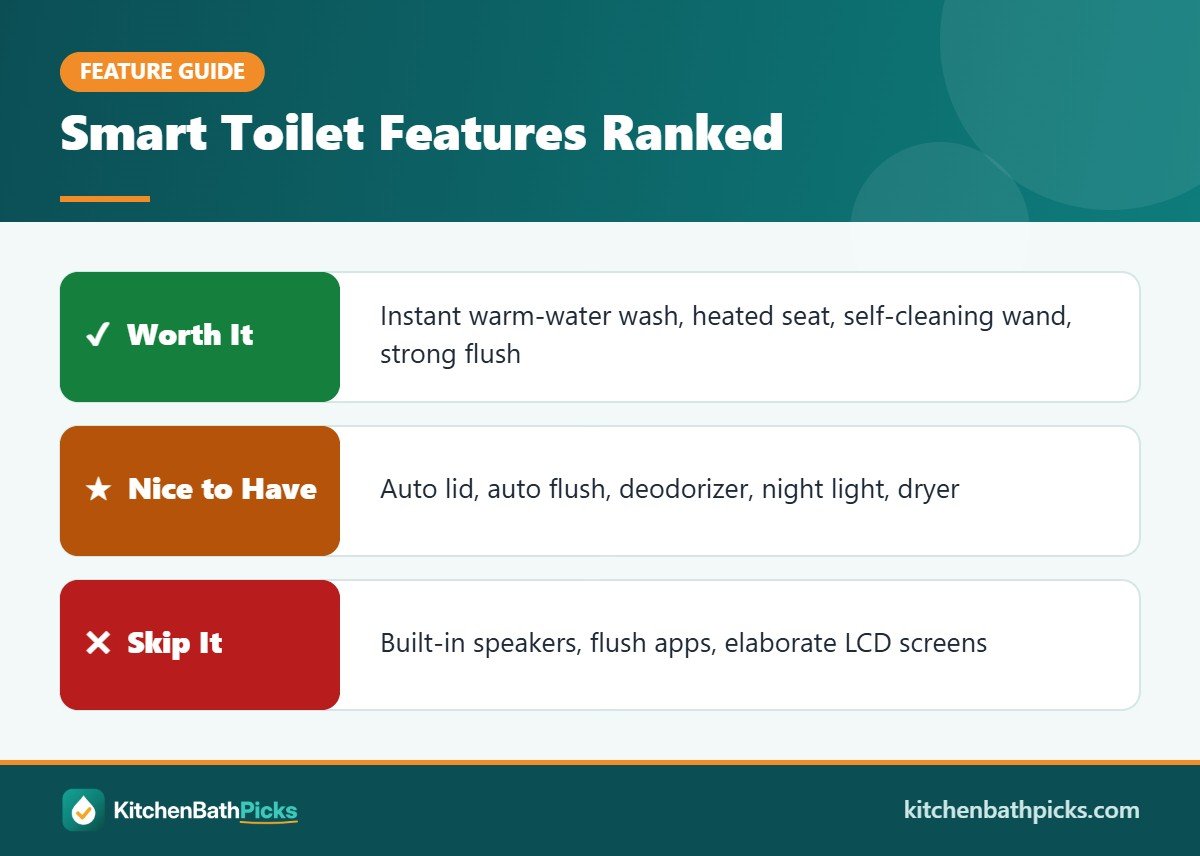
- ✓Knowing how smart toilets work helps you focus on what matters: instant warm-water washing, a heated seat and a self-cleaning wand.
- ✓Check the MaP flush score; 800 grams or higher is good.
- ✓You’ll need a GFCI outlet within a few feet of the toilet.
- ✓A bidet seat gives you most of the comfort for far less if your current toilet flushes well.
How Smart Toilets Work: What Makes a Toilet “Smart”
A smart toilet is a toilet with electronics built in. At minimum, that usually means a powered bidet wash and a heated seat. Higher-end models add automatic flushing, motion-activated lids, warm-air drying, deodorizers, night lights, user presets and sometimes app or voice control. Most smart toilets combine a standard bowl with an electronic seat, a water heater and a control panel or remote. That, in short, is how smart toilets work: power, water and sensors working together.
The key difference from a regular toilet is power. Every smart toilet needs an electrical outlet nearby, and that single requirement shapes the whole decision.
Smart Toilet Features That Matter Most
Warm-water bidet washing
This is the main reason most people buy a smart toilet. A small wand extends under the seat and sprays a gentle stream of water, with adjustable pressure, position and temperature. Many users find it cleaner and more comfortable than paper alone, and it can reduce toilet paper use significantly.
Pay attention to how the water is heated. Instant (tankless) heaters warm water on demand, so the stream never runs cold. Tank heaters keep a small reservoir warm, which uses standby power and can run lukewarm during a long wash. Instant heating is worth paying for.
Heated seat
It sounds indulgent until the first cold morning in January. Look for adjustable temperature and an eco or timer mode that lowers the heat overnight. That keeps standby energy use reasonable.
Self-cleaning wand
The wand rinses itself before and after each use. Some models add UV light or electrolyzed water to sanitize it. A stainless steel wand is easier to keep clean than plastic. This feature matters more than it sounds, because a dirty nozzle is the main hygiene complaint about bidets.
A strong, reliable flush
Electronics don’t fix a weak bowl design. Check the MaP (Maximum Performance) score, which measures how much waste a toilet clears in one flush. A score of 800 grams or higher is good, and many smart toilets advertise 1,000 grams. Also look for the WaterSense label, which means the toilet uses no more than 1.28 gallons per flush. Our guide to the best toilets explains flush ratings in more detail. The EPA’s WaterSense program certifies toilets that flush at 1.28 gallons or less while passing performance tests, and many smart toilets carry the label.
Nice-to-Have Features
- Automatic lid opening and closing: genuinely pleasant, and it ends the seat-up argument. Not essential.
- Auto flush: handy for hygiene and households with kids. Make sure there’s a manual backup for power outages.
- Warm-air dryer: useful, but most people still finish with a little paper. Dryers are slow.
- Deodorizer: a carbon filter fan that runs while you sit. Helpful in small bathrooms without great ventilation.
- Night light: a soft glow in the bowl helps nighttime trips without switching on bright lights.
- Foam shield or pre-mist: sprays a layer of foam or water before use so less sticks to the bowl. It does reduce cleaning.
Features You Can Skip
Built-in speakers, smartphone apps for flushing and elaborate LCD screens add cost and complexity without much benefit. Apps may stop getting updates after a few years. Voice control is a novelty for most families. If budget matters, put the money into a better wash system and flush instead.
Installation: What You Need First
An outlet within reach
Smart toilets plug into a standard 120-volt outlet, and the cord is usually short, often 3 to 4 feet. The outlet should be GFCI-protected, as bathroom receptacles must be under electrical codes. Many bathrooms have no outlet near the toilet, so budget for an electrician to add one. Running the cord across the floor to the vanity outlet is unsafe and messy. All smart toilets need a nearby outlet, and most need decent water pressure too.
Rough-in and water pressure
Measure from the wall (not the baseboard) to the center of the toilet bolts. Most homes have a 12-inch rough-in, but some older homes use 10 or 14 inches. Choose a model that matches.
Tankless smart toilets use a pump or direct line pressure instead of a gravity tank. Check the minimum water pressure in the specifications, especially if you live on an upper floor or on well water. Models with a built-in booster pump work better in low-pressure homes, and some can still flush during a power outage using a backup battery or manual lever.
Weight and handling
Integrated smart toilets can weigh over 100 pounds and contain electronics that don’t like being dropped. Professional installation is common and worth it.
Pro Tip: Check for an outlet first
Knowing how smart toilets work includes knowing they need power. Cords are often only 3 to 4 feet long, so if there’s no GFCI outlet beside the toilet, plan for an electrician first.
Smart Toilets or a Bidet Seat?
A bidet seat replaces only the seat on your existing toilet. It offers most of the same comfort features (warm wash, heated seat, dryer, self-cleaning wand) for a fraction of the price, and you can take it with you when you move.
Choose a bidet seat if: your toilet flushes well, you rent, you want to try the features first, or you’re on a budget. Our roundup of the best bidet toilet seats covers electric and non-electric options.
Choose an integrated smart toilet if: you’re replacing the toilet anyway, you’re remodeling, you want a sleek one-piece look without a visible seat unit, or you want automatic flushing and lid functions built in.
Cleaning and Care
Smart toilets are easier to keep clean day to day, but they still need some care:
- Use mild cleaners. Harsh chemicals and abrasive pads can damage plastic seats and electronics.
- Run the manual wand-cleaning mode weekly, and replace the nozzle if it ever cracks.
- Clean or replace the deodorizer filter as directed.
- If you have hard water, check the inlet filter screen once or twice a year. Mineral buildup reduces pressure.
Good ventilation helps too. Moisture from showers can affect electronics over time, so run the exhaust fan. Our guide on where mold hides explains why bathroom humidity matters.
The Bottom Line
The features that make a real difference are a warm-water wash with instant heating, a heated seat, a self-cleaning wand and a strong, WaterSense-certified flush. Everything else is a bonus. Before you buy, confirm there’s an outlet within reach, your rough-in matches and your water pressure meets the specifications. Get those three right, and a smart toilet is one of the few bathroom upgrades you’ll appreciate every single day. The best smart toilets are the ones whose features you will use every day. Once you know how smart toilets work, it’s much easier to decide which features you’ll actually use.
Smart Toilets FAQs
Do smart toilets need electricity?
Yes. Smart toilets plug into a standard 120-volt, GFCI-protected outlet near the toilet. Many bathrooms need an electrician to add one before installation.
Can a smart toilet flush during a power outage?
It depends on the model. Many have a manual flush lever or battery backup, but some tankless models with electric pumps cannot flush without power. Check the specifications before buying.
Is a bidet seat as good as a smart toilet?
A good electric bidet seat offers most of the same comfort features for much less money. An integrated smart toilet adds a seamless look and functions like auto flush and automatic lids.
What is a good MaP score for a smart toilet?
A MaP score of 800 grams or more is solid, and 1,000 grams is excellent. Pair a high MaP score with the WaterSense label for strong, water-efficient flushing.
Are smart toilets hard to clean?
No. Features like self-cleaning wands, foam shields and rimless bowls make routine cleaning easier. Use mild cleaners to protect the seat and electronics.