Kitchen Bath Picks is reader-supported. When you buy through links on this page, we may earn an affiliate commission at no extra cost to you. Learn more.
In this review
- Assess the true shape of the under-sink space
- Sort items before starting under-sink organization
- Use vertical space without blocking access
- Use pull-out systems for under-sink organization
- Balance flexibility with stability
- Moisture-proof materials for under-sink organization
- Match storage to the overall aesthetic
- Create order in your bathroom under-sink cabinet
- Habits that keep under-sink organization working
- A step-by-step under-sink organization plan
- Products for smart under-sink organization
- FAQs about under-sink organization
- Final thoughts
The cabinet under the sink is one of the hardest-working and most awkward spaces in any home. Pipes, a garbage disposal or a water filter take up the middle, the back is hard to reach and moisture is always a risk. It’s also where cleaning supplies, sponges, trash bags and spare toiletries tend to pile up. With the right approach, under-sink organization can turn that chaotic cabinet into one of the most useful spaces in your kitchen or bathroom.
Quick answer: For smart under-sink organization, empty the cabinet and measure around the plumbing, sort and discard what you don’t need, then use pull-out or L-shaped sliding organizers that fit around pipes, stackable bins, turntables and door-mounted racks. Line the base with a waterproof mat, add a water leak sensor and store hazardous cleaners safely away from children and pets.
Assess the true shape of the under-sink space
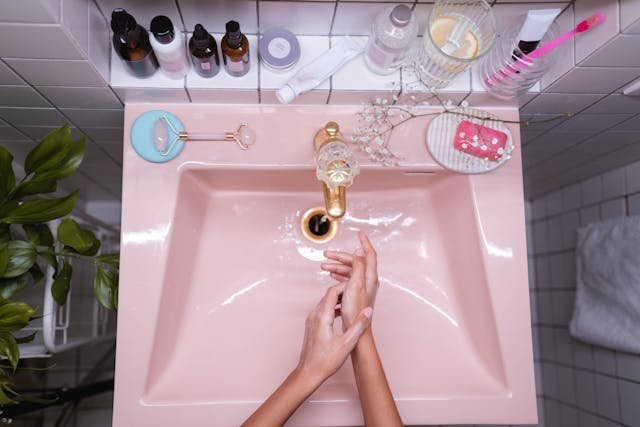
Empty the cabinet completely and measure the interior width, depth and height. Then measure around the obstacles: the drain trap, supply lines, shut-off valves, disposal and any filter. Note the cabinet door opening width and any center stile, because organizers must fit through the door, not just inside the cabinet. While it’s empty, check for leaks, water stains or soft spots; see our guides to the sink P-trap and clogged sink drains.
Sort items before starting under-sink organization
- Keep: items used weekly, such as dish soap refills, sponges and trash bags.
- Relocate: rarely used items, spare toiletries or bulk supplies.
- Discard safely: expired or dried-out products. Follow local guidance for household hazardous waste.
Group the rest by category: dish care, surface cleaners, bags and liners, and tools such as brushes and gloves.
Use vertical space without blocking access
Two-tier organizers double usable space, but leave clear access to shut-off valves so you can reach them quickly in an emergency. Stackable bins and adjustable shelves work around pipes. A tension rod mounted near the top can hold spray bottles by their triggers.
Use pull-out systems for under-sink organization
Pull-out drawers bring items from the back of the cabinet to the front, which is where most under-sink storage fails. L-shaped and U-shaped sliding organizers are designed to fit around drain pipes and disposals. Look for rust-resistant coatings and smooth glides.
Balance flexibility with stability
Freestanding organizers are easy to adjust and remove when a plumber needs access; screw-mounted pull-outs are sturdier for heavy items. Many homes use a mix: a stable pull-out on one side and flexible bins on the other.
Moisture-proof materials for under-sink organization
Under-sink cabinets see drips, condensation and the occasional leak. Choose plastic, powder-coated steel or stainless steel organizers rather than unsealed wood or cardboard. A waterproof silicone mat protects the cabinet base and contains spills. A water leak sensor alerts you early if something starts dripping; see the benefits of smart technology in your kitchen.
Match storage to the overall aesthetic
Clear or white bins look clean and make contents easy to see. Decanting dish soap into a matching dispenser and labeling bins keeps the space tidy, which makes it more likely to stay that way.
Create order in your bathroom under-sink cabinet
The same principles apply in the bathroom. Use small bins for hair tools, toiletries and first-aid supplies, a turntable for bottles, and an over-door rack for hair dryers (once cool). Keep medicines in a cool, dry place out of children’s reach rather than in a humid vanity. Browse our must-have bathroom accessories.
Safety note: Many cleaning products are hazardous if swallowed or mixed. Store them in their original containers, never mix bleach with ammonia or acids, and use a child-safety latch on under-sink cabinets if you have young children or pets. Keep the Poison Help line (1-800-222-1222 in the U.S.) handy.
Habits that keep under-sink organization working
- Return items to their bin after each use.
- Check for leaks and wipe the mat monthly.
- Do a quick review each season and remove empties.
- Keep a refill list on the inside of the cabinet door.
- Consider safer, simple cleaners; see our homemade cleaners guide.
For more organizing ideas, see our space-saving solutions and storage hacks for your kitchen appliances.

A step-by-step under-sink organization plan
- Empty and clean the cabinet, and dry it fully.
- Inspect the plumbing for drips, corrosion or damp wood.
- Measure the interior, the door opening and the space around pipes.
- Lay down a waterproof mat to protect the base.
- Install a pull-out on the side with the most open space.
- Add bins and a turntable for smaller items.
- Mount a door rack or hooks for gloves, brushes and bags.
- Place a leak sensor at the lowest point near the pipes.
- Add a child-safety latch if needed.
The whole job usually takes an afternoon, and the result lasts for years with very little upkeep.
Products for smart under-sink organization
1. L-Shaped 2-Tier Pull-Out Under Sink Organizer
An L-shaped, two-tier sliding organizer that fits around plumbing and disposals.
- ShapeL-shaped
- Tiers2
- MaterialAlloy steel
- InstallNo tools; suction cups and tape
- UseKitchen and bathroom
Pros
- Fits around pipes
- Pulls out from both sides
- Rust-resistant
Cons
- Measure around plumbing
- Not for very heavy loads
Who it’s best for
Kitchen and bathroom sink cabinets with pipes in the middle.
Good to know before you buy
Measure around the drain and disposal before ordering.
2. Waterproof Under Sink Mat, 34 x 19 Inch
A silicone mat that protects the cabinet base from leaks and spills.
- Size34 x 19 in
- MaterialSilicone
- FeatureWaterproof, raised edges
- UseKitchen and bathroom sink cabinets
Pros
- Contains drips and spills
- Easy to clean
- Protects cabinet base
Cons
- Measure cabinet first
- Doesn’t replace fixing leaks
Who it’s best for
Protecting cabinet bases from drips and spills.
Good to know before you buy
It contains water but doesn’t replace fixing a leak.
3. GoveeLife Smart Water Leak Detector, 5-Pack
Water leak sensors with loud alarms and app alerts.
- Pack5
- AlertsApp, loud alarm
- UseUnder sinks, behind appliances
- BrandGoveeLife
Pros
- Early warning of leaks
- Covers several cabinets
- Loud local alarm
Cons
- Requires setup
- Batteries need replacing
Who it’s best for
Early warning of leaks under sinks and behind appliances.
Good to know before you buy
Test the sensors after setup and replace batteries as needed.
4. Copco 18-Inch Lazy Susan Turntable
A nonslip turntable that makes bottles and sprays easy to reach.
- Diameter18 in
- SurfaceNonslip
- UseUnder sinks, pantry, cabinets
- BrandCopco
Pros
- Easy access to the back
- Inexpensive
- Easy to clean
Cons
- Check fit around pipes
- Round shape leaves corners
Who it’s best for
Bottles and sprays that get lost at the back of the cabinet.
Good to know before you buy
Check that it clears the pipes when it spins.
FAQs about under-sink organization
How do I organize under my sink with pipes in the way?
Use L- or U-shaped pull-outs, stackable bins and turntables that fit around plumbing.
What should I store under the kitchen sink?
Dish supplies, sponges, trash bags and cleaners, stored safely if you have children or pets.
How do I protect the cabinet from leaks?
Use a waterproof mat, add a leak sensor and check plumbing regularly.
Should I leave access to shut-off valves?
Yes. Always keep shut-off valves easy to reach in an emergency.
Is it safe to store cleaning products under the sink?
It can be if you use child-safety latches and never mix products. Store them in original containers.
How often should I reorganize under the sink?
A quick check monthly and a deeper review each season keeps it tidy.
Final thoughts
Smart under-sink organization starts with measuring around the plumbing and sorting what you really need. Add pull-outs, bins and turntables made from moisture-resistant materials, protect the cabinet with a waterproof mat and leak sensor and store cleaners safely. With a few simple habits, the most awkward cabinet in your home becomes one of the most useful.