Kitchen Bath Picks is reader-supported. When you buy through links on this page, we may earn an affiliate commission at no extra cost to you. Learn more.
In this guide
- Open shelving displays: pros and cons
- 1. Balance form and function
- 2. Curate, don't clutter
- 3. Use the power of color coordination
- 4. Layering: the secret sauce of shelving
- 5. Rotate seasonally for freshness
- 6. Respect the importance of negative space
- 7. Practical considerations: accessibility and cleaning
- 8. Mix materials for a dynamic look
- Open shelving displays in small kitchens
- How to install open shelving displays safely
- Styling checklist
- Products to style open shelving displays
- FAQs about open shelving displays
- Final thoughts
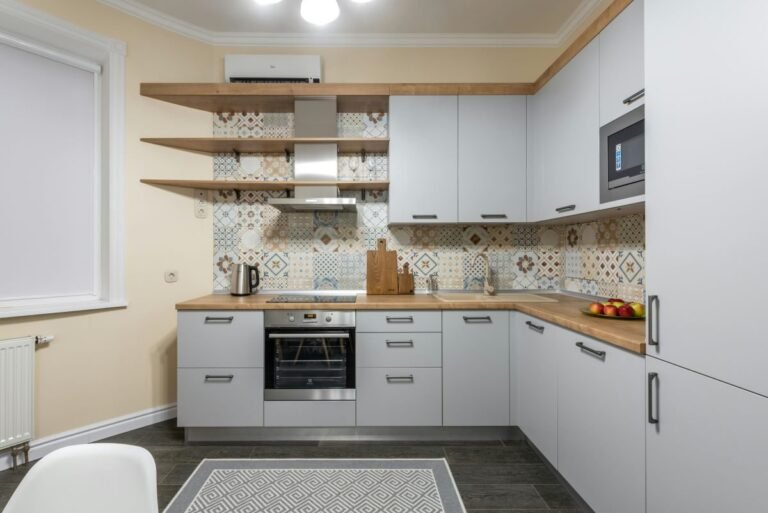
Open shelves can make a kitchen feel lighter, more personal and more lived-in than a wall of upper cabinets. They put your favorite dishes, cookbooks and plants on show and keep everyday items within easy reach. They can also turn into a dusty, cluttered mess if they’re not planned well. The difference is almost always in the styling and the habits behind it.
This guide covers how to master open shelving displays in your kitchen, balancing form and function, so your shelves look curated and stay practical every day.
Quick answer: To master open shelving displays, store items you use often, edit ruthlessly, stick to a tight color palette, layer heights and textures, leave negative space and mix materials like wood, ceramic, glass and greenery. Keep shelves away from the range where grease and steam collect, mount them securely into studs, and wipe them down regularly.

Open shelving displays: pros and cons
| Pros | Cons |
|---|---|
| Easy access to everyday items | Dust and grease build up |
| Makes small kitchens feel larger | Clutter is visible |
| Shows off favorite pieces | Less storage than cabinets |
| Often cheaper than cabinets | Needs regular styling and cleaning |
| Easy to change seasonally | Heavy items need strong mounting |
1. Balance form and function
The best open shelving displays hold things you actually use: everyday plates, glasses, mugs, mixing bowls, cookbooks and pantry jars. Use counts as cleaning: items you reach for weekly don’t sit long enough to gather dust. Mix in a few decorative pieces, such as a vase, a small print or a plant, for personality.
2. Curate, don’t clutter
Edit before you style. Pull everything off, then put back only what’s useful or beautiful. A good rule is to fill shelves no more than two-thirds full. Group items in odd numbers (threes and fives), and keep miscellaneous small items in a basket or box.
3. Use the power of color coordination
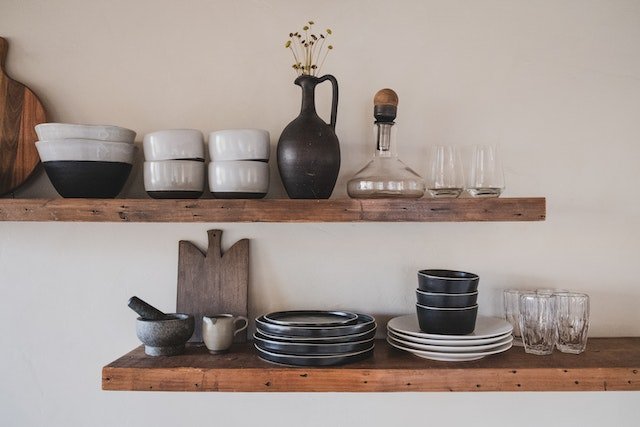
A limited palette makes open shelving displays look calm and intentional. White and cream dishes, natural wood and glass look timeless; add one accent color through pottery, cookbooks or textiles. Coordinate with your cabinets, backsplash and walls. If you’re considering a patterned backdrop, see where to add wallpaper in your kitchen or try a trendy backsplash behind the shelves.
4. Layering: the secret sauce of shelving
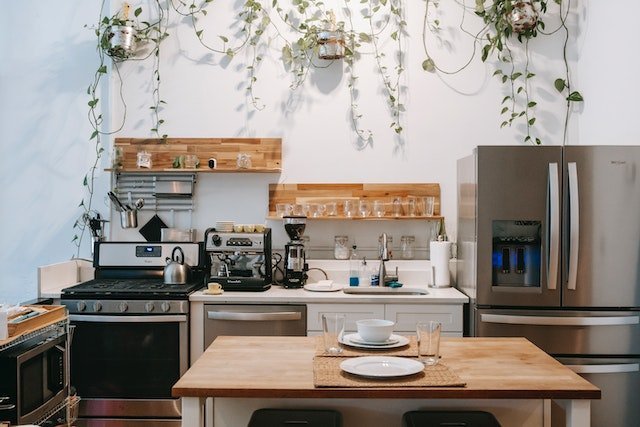
Layer from back to front and vary heights. Lean a cutting board or plate on a stand at the back, add a stack of bowls in front and finish with a small object or jar. Mix tall, medium and low items across each shelf, and create a loose zigzag of heights from shelf to shelf so the eye moves across the display.
5. Rotate seasonally for freshness
Swap a few pieces each season: fresh greenery in spring, citrus-toned bowls in summer, warm wood and copper in fall and festive touches in winter. It keeps open shelving displays feeling fresh without buying more.
6. Respect the importance of negative space
Empty space is what lets the items on your shelves stand out. Leave gaps between groups and avoid filling every inch. Negative space also makes shelves easier to clean and items easier to grab.
7. Practical considerations: accessibility and cleaning
- Placement: keep shelves at least a few feet from the range, or under a well-vented hood, to reduce grease buildup.
- Height: put everyday items on lower shelves within easy reach.
- Mounting: anchor shelves into studs or use rated anchors and check the weight capacity before loading plates.
- Cleaning: dust weekly and wipe shelves with mild soap monthly; wash display items in rotation.
- Safety: in earthquake-prone areas, use a lip or rail on the shelf edge and keep heavy items low.
8. Mix materials for a dynamic look
Combine wood shelves with ceramic dishes, glass jars, woven baskets, metal accents and plants. Herbs and trailing pothos soften the look; see our guide to plants for ideas. Texture is what keeps a neutral palette from feeling flat.
Open shelving displays in small kitchens
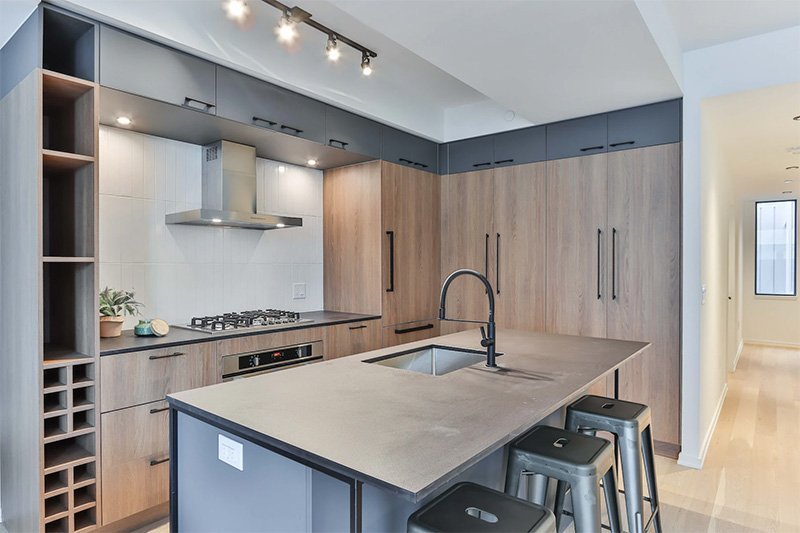
In a small kitchen, open shelves can replace bulky upper cabinets and make the room feel taller and brighter. Use slim shelves on an end wall, above a window or beside the range hood. Combine them with closed storage for less attractive items. See our space-saving solutions and ways to create more space in your kitchen.
How to install open shelving displays safely
- Find the studs with a stud finder and mark them. Wherever possible, screw brackets directly into studs.
- Check for hidden hazards. Avoid drilling where pipes or wires are likely, such as directly above or below outlets and switches, or in line with the sink.
- Use a level and mark bracket holes before drilling.
- Use the right anchors for drywall, plaster or tile if you can’t hit a stud, and stay within their weight rating.
- Load gradually, putting heavier items near the brackets and closer to the wall.
Plates and glassware are heavier than they look. A stack of a dozen dinner plates can weigh well over 20 pounds, so match the shelf and bracket rating to what you plan to display, and choose heavy-duty brackets for longer runs.
Styling checklist
- Choose a palette of two or three colors.
- Start with the largest items, then fill in medium and small pieces.
- Group like items together, such as glasses, bowls and jars.
- Add one or two living elements.
- Step back, remove one item and look again.
Products to style open shelving displays
1. BAYKA Rustic Brown Floating Shelves, 22.5-Inch, Set of 2
Wall-mounted engineered wood shelves with sturdy brackets for kitchen displays.
- Size22.5 x 6.7 in
- CapacityUp to 22 lb per shelf
- MaterialEngineered wood
- Quantity2 shelves
- BrandBAYKA
Pros
- Warm rustic look
- Easy installation
- Good value
Cons
- Not for heavy stacks of plates
- Mount into studs or rated anchors
Who it’s best for
Adding warm, rustic open shelves for dishes, jars and decor.
Good to know before you buy
Each shelf holds up to about 22 lb, so keep heavy stacks of plates elsewhere.
2. ComSaf Glass Pantry Storage Containers, Set of 6
Square glass containers that keep dry goods fresh and look tidy on open shelves.
- Pieces6
- Sizes0.7, 1.2 and 1.6 qt
- MaterialGlass
- ShapeSquare
- BrandComSaf
Pros
- Clear glass shows contents
- Uniform look
- Space-efficient square shape
Cons
- Glass is heavy on shelves
- Check lid seal care
Who it’s best for
Storing pantry staples attractively on open shelves.
Good to know before you buy
Glass adds weight, so check your shelf’s capacity.
3. Tatuo Wooden Plate Stands, 4-Pack, 7-Inch
Black wooden easels for displaying plates, cutting boards and art on shelves.
- Quantity4 stands
- Height7 in
- MaterialWood
- ColorBlack
- BrandTatuo
Pros
- Adds height and layers
- Inexpensive
- Versatile
Cons
- Check size for large platters
- Lightweight stands can tip
Who it’s best for
Layering plates and boards for a styled look.
Good to know before you buy
Use larger stands for big platters.
4. StorageWorks Wicker Storage Basket
A woven basket that corrals small items and adds natural texture to open shelves.
- MaterialWicker
- Quantity1
- UseShelves, pantry, counters
- BrandStorageWorks
Pros
- Hides small clutter
- Natural texture
- Lightweight
Cons
- Measure shelf depth
- Wicker collects dust
Who it’s best for
Hiding small items and adding natural texture.
Good to know before you buy
Measure your shelf depth first.
FAQs about open shelving displays
Are open shelves practical in a kitchen?
Yes, for frequently used items, as long as they’re placed away from the stove and cleaned regularly.
How do I keep open shelves from looking cluttered?
Edit to essentials, use a tight color palette, group items and leave negative space.
What should I put on open kitchen shelves?
Everyday dishes, glasses, cookbooks, pantry jars, a few decorative pieces and plants.
How do I keep open shelves clean?
Dust weekly, wipe with mild soap monthly and keep shelves away from cooking grease.
How much weight can floating shelves hold?
It depends on the shelf and mounting; check the manufacturer’s rating and anchor into studs.
Can I mix open shelves and cabinets?
Yes. Many kitchens combine open shelves for display with closed cabinets for storage.
Final thoughts
Mastering open shelving displays in your kitchen comes down to a few habits: store what you use, edit often, keep a consistent palette, layer heights and leave negative space. Place shelves wisely, mount them securely and clean them regularly. Do that, and your open shelves will be one of the most beautiful and useful features of your kitchen. Browse our kitchen cabinet guide if you’re combining shelves with closed storage.