Kitchen Bath Picks is reader-supported. When you buy through links on this page, we may earn an affiliate commission at no extra cost to you. Learn more.
In this guide
- Declutter and organize before you unpack
- Embrace a neutral color palette
- Clean lines and simple designs
- Maximize storage with smart solutions
- Incorporate functional, minimalist decor
- Habits that keep a kitchen with minimalist design calm
- Avoiding a cold, sterile look
- Choosing materials for a kitchen with minimalist design
- Lighting a minimalist kitchen
- A step-by-step plan for your new kitchen
- Products for a kitchen with minimalist design
- FAQs about a kitchen with minimalist design
- Final thoughts
Moving into a new home is the perfect moment to rethink your kitchen. Every box you unpack is a decision about what deserves space, and it’s far easier to start minimal than to declutter a kitchen you’ve filled for years. A kitchen with minimalist design feels calm and spacious, takes less time to clean and makes cooking more enjoyable because everything you need is easy to find.
Minimalism isn’t about stark, empty rooms. It’s about keeping what’s useful and beautiful, hiding the rest and letting clean lines, natural light and a few quality pieces do the work. Here’s how to transform your new kitchen with minimalist design.
Quick answer: To create a kitchen with minimalist design, declutter before you unpack, keep only tools you use regularly, choose a neutral palette, favor flat-panel or simple Shaker cabinets with minimal hardware, hide small appliances and maximize closed storage with organizers. Keep counters nearly empty and add one or two natural accents like wood or a plant.
Declutter and organize before you unpack
Moving as an opportunity
Unpack the kitchen in stages. Start with the essentials: a few pans, a good knife, a cutting board, plates and glasses for your household. Leave the rest in labeled boxes for a few weeks. Whatever you haven’t needed by then is a candidate to donate.
Remove unnecessary items
- Single-use gadgets you rarely use.
- Duplicate utensils, mugs and storage containers.
- Chipped dishes and worn-out pans.
- Appliances whose job another appliance already does.
Our guide to essential kitchen appliances can help you decide which ones earn their place.
Embrace a neutral color palette
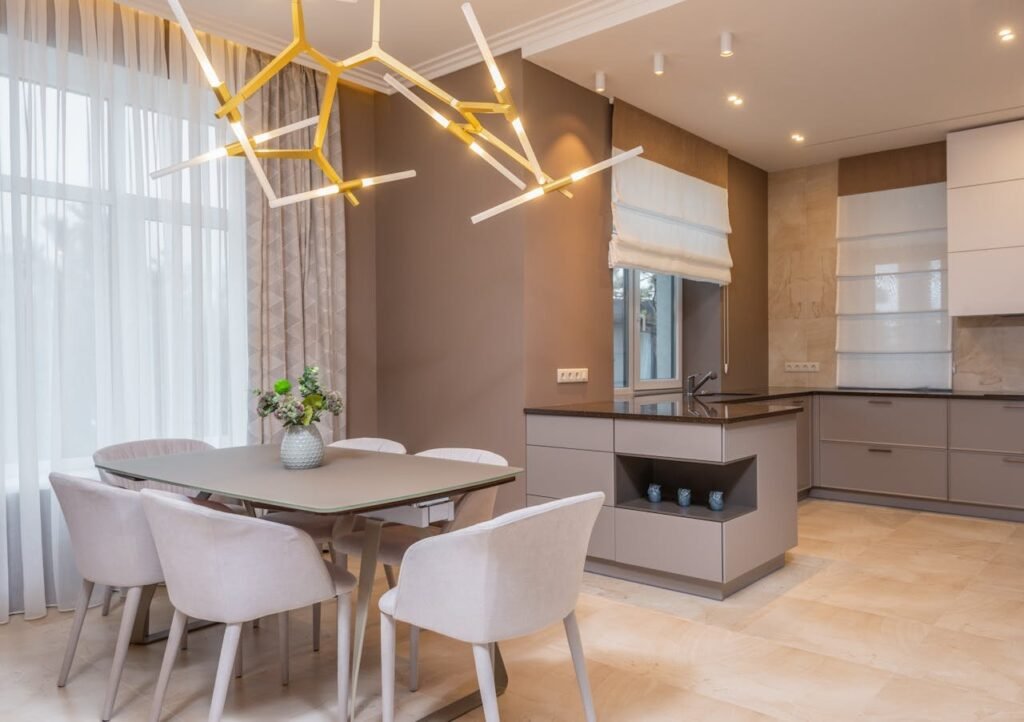
A kitchen with minimalist design usually relies on a restrained palette: white, warm white, greige, soft gray, black and natural wood. Neutrals make the room feel larger and let texture stand out. Add warmth with wood, stone and matte finishes rather than lots of color. Light colors also help reflect daylight; see our tips on maximizing natural light.
Clean lines and simple designs
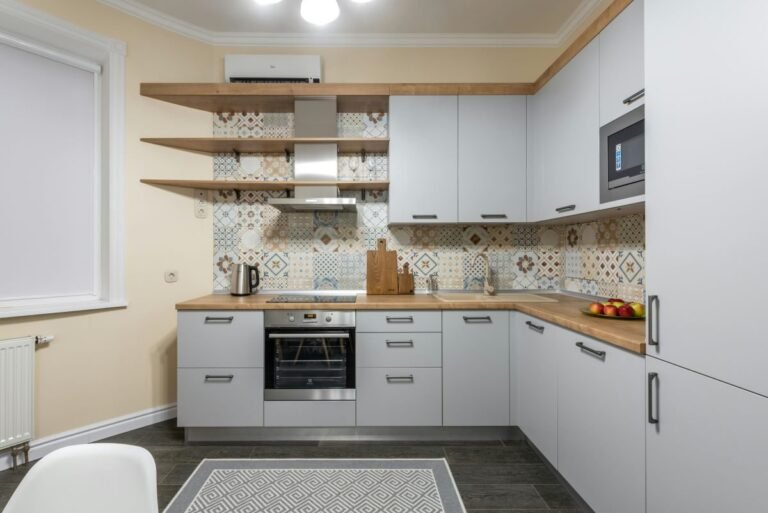
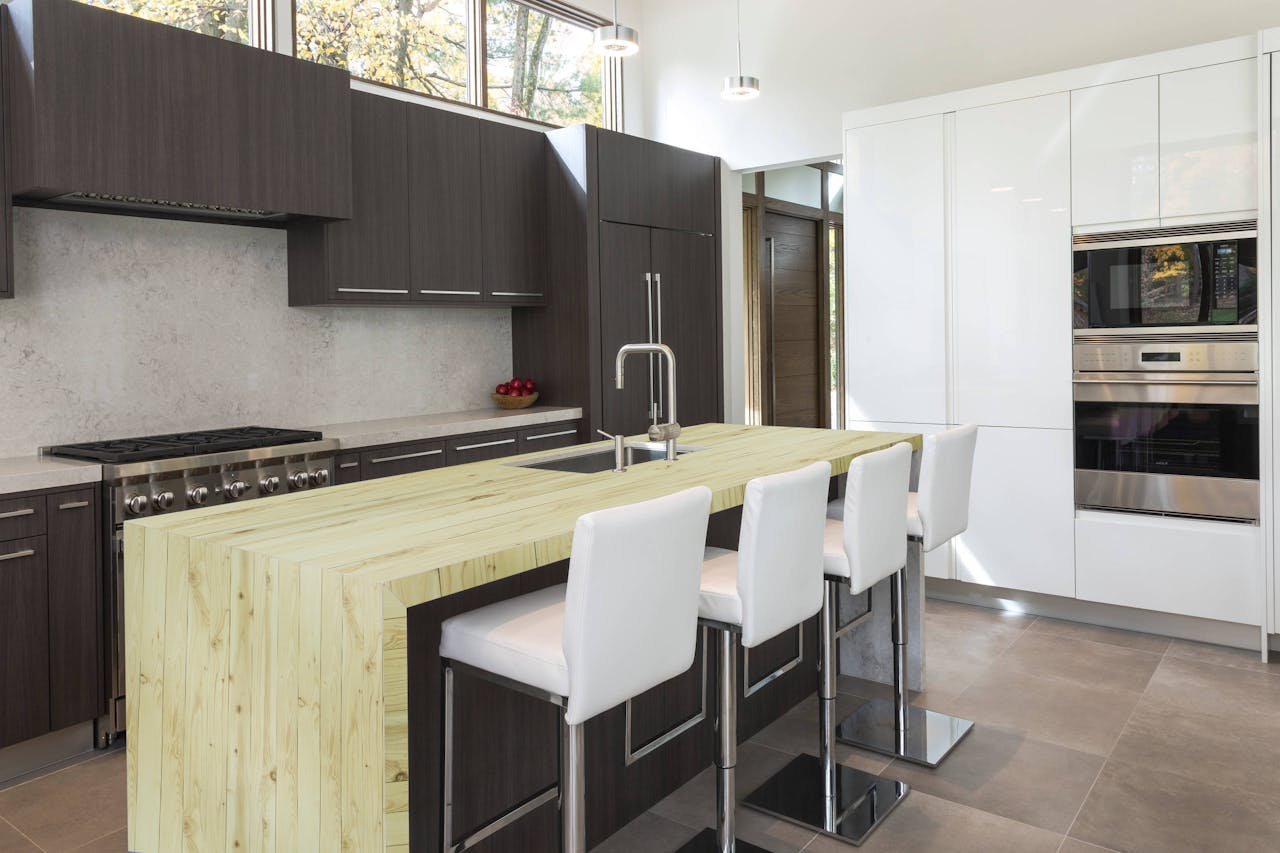
Flat-panel (slab) or simple Shaker cabinet doors, integrated or slim handles, and solid-color or subtly veined countertops create the clean lines that define minimalism. Avoid ornate molding and busy patterns. Full-height backsplashes in a single material and integrated appliances add to the seamless look. Browse our kitchen cabinet guide for options.
Maximize storage with smart solutions
Minimalism depends on great hidden storage, so items have a home behind closed doors:
- Drawer organizers for cutlery, utensils and tools.
- Deep drawers instead of base cabinets for pots and pans.
- Pull-outs for spices, oils and trash.
- An appliance garage or pantry shelf for the toaster, blender and coffee maker.
- Matching containers in the pantry so even open storage looks calm.
See our space-saving solutions for more ideas.
Incorporate functional, minimalist decor
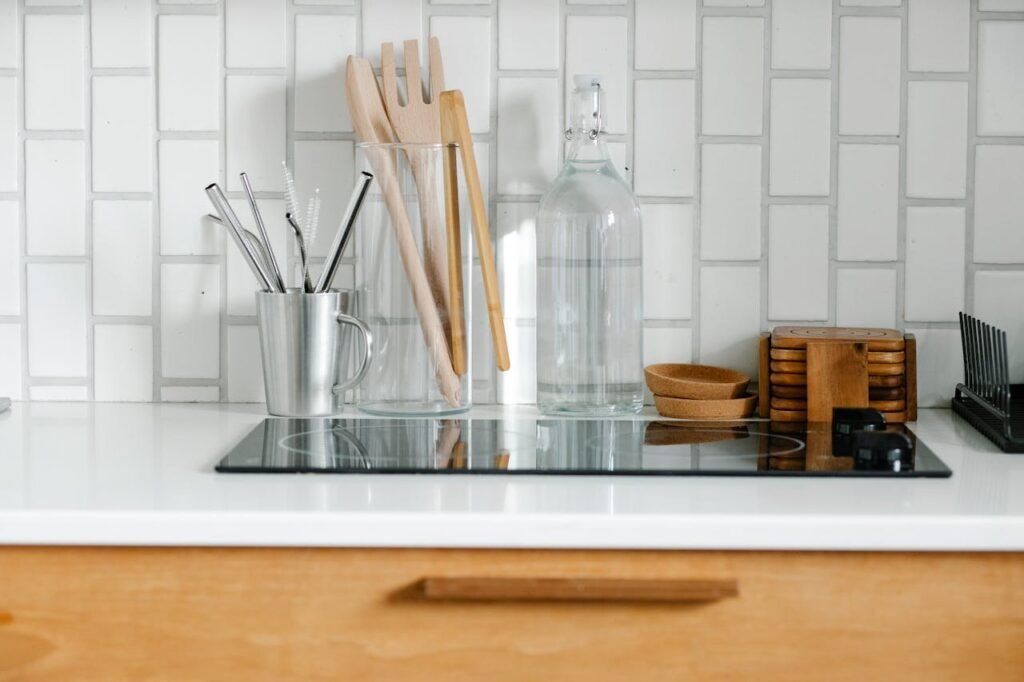
Choose decor that’s also useful: a wooden cutting board leaning against the backsplash, a ceramic utensil crock, a bowl of fruit or a single plant. If you have open shelves, keep them sparse; our guide to open shelving displays explains how.
Habits that keep a kitchen with minimalist design calm
A minimalist kitchen stays minimal through small daily habits rather than big, occasional purges. The goal is to make putting things away just as easy as taking them out.
- Clear counters every evening.
- Follow a one-in, one-out rule for new items.
- Store items near where they’re used.
- Review drawers and the pantry every season.
Avoiding a cold, sterile look
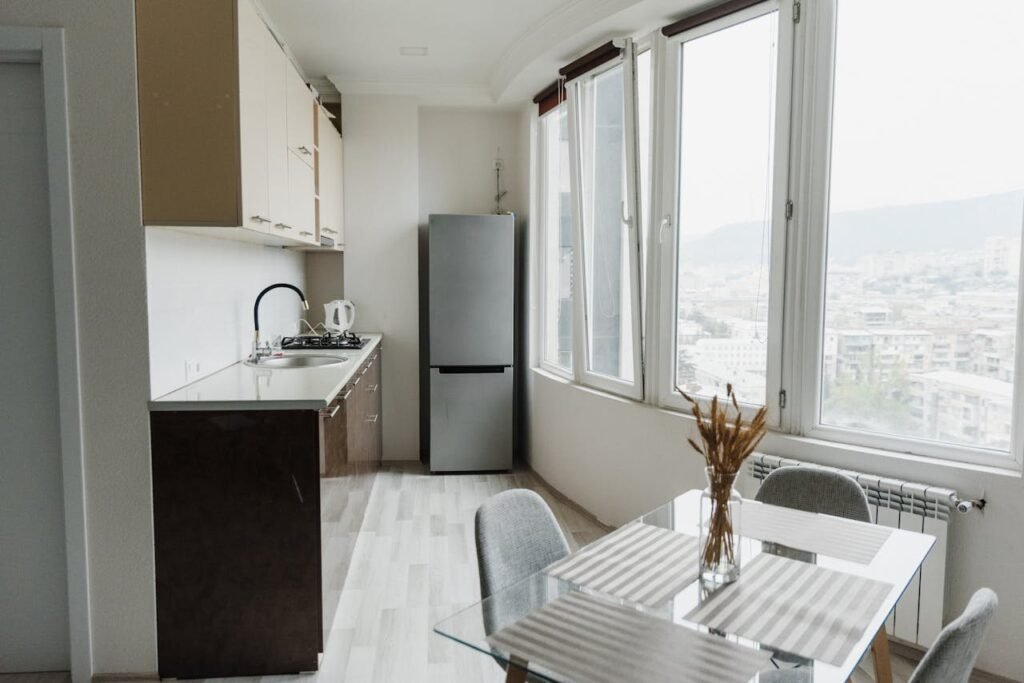
Minimalism can tip into clinical if every surface is white and glossy. Balance it with natural textures (oak, walnut, stone, linen), warm lighting around 2700K to 3000K and a few personal pieces. Matte finishes and handleless cabinets in warm tones feel calmer than high-gloss white. For more styling ideas, see our chic kitchen decor ideas.
Choosing materials for a kitchen with minimalist design
Because a minimalist kitchen has fewer objects, each surface gets more attention. That makes material quality more important than quantity. A few good choices:
- Countertops: solid-color or softly veined quartz, honed stone, concrete or warm butcher block. Avoid busy granite patterns that compete with clean lines.
- Cabinets: matte lacquer, wood veneer or painted slab doors. Push-to-open latches or edge pulls keep fronts uninterrupted.
- Backsplash: a single slab, large-format porcelain or simple stacked tile with matching grout for a seamless look.
- Flooring: wide-plank wood, large tile or polished concrete with minimal grout lines.
- Fixtures: a slim, single-handle faucet and an undermount sink keep the counter clean and easy to wipe.
Lighting a minimalist kitchen
Lighting is one of the few places a minimalist kitchen can show some personality. Recessed or slim surface-mounted ceiling lights provide even ambient light without visual clutter. LED strips tucked under cabinets or shelves light work surfaces and give a soft glow at night. A single sculptural pendant or a simple row of matching pendants over an island can serve as the room’s focal point. Keep color temperatures consistent across fixtures so the room feels cohesive, and add dimmers to shift from bright cooking light to a calm evening mood.
A step-by-step plan for your new kitchen
- Unpack essentials only and store extras in labeled boxes.
- Measure drawers and cabinets, then buy organizers that fit.
- Assign zones for prep, cooking, cleaning and serving.
- Choose a home for every small appliance off the counter.
- After a few weeks, donate what you haven’t unpacked.
- Add one or two natural accents and stop there.
Products for a kitchen with minimalist design
1. Pipishell Expandable Bamboo Silverware Organizer, Large
An expandable bamboo drawer tray that keeps cutlery and utensils neatly separated.
- MaterialBamboo
- SizeExpandable, large
- UseCutlery, utensils, tools
- BrandPipishell
Pros
- Adjusts to drawer width
- Natural, warm look
- Keeps drawers tidy
Cons
- Measure drawer depth and width
- Hand wash only
Who it’s best for
Keeping cutlery and tools neatly separated in drawers.
Good to know before you buy
Measure the drawer’s width and depth, and hand wash the bamboo.
2. OXO Good Grips 10-Piece POP Container Set
Airtight, stackable containers for a clean, uniform pantry.
- Pieces10
- SealAirtight push-button
- StackableYes
- BrandOXO
Pros
- Uniform, calm look
- Keeps food fresh
- Space-efficient
Cons
- Lids need hand washing
- Measure shelf height
Who it’s best for
A calm, uniform pantry with fresh staples.
Good to know before you buy
Lids need hand washing; check your shelf heights.
3. Modern Innovations 16-Inch Magnetic Knife Bar
A sleek stainless steel magnetic strip that replaces a bulky knife block.
- Length16 in
- MaterialStainless steel
- MountWall
- BrandModern Innovations
Pros
- Frees counter space
- Clean, minimal look
- Strong hold
Cons
- Mount securely
- Keep out of children’s reach
Who it’s best for
Clearing knife blocks off the counter.
Good to know before you buy
Mount it securely into studs or rated anchors.
4. Rev-A-Shelf Pullout Cabinet Organizer
A pull-out organizer that makes deep base cabinets fully usable.
- Min opening width14.5 in
- TypePull-out
- UseBase cabinets
- BrandRev-A-Shelf
Pros
- Uses full cabinet depth
- Hides clutter
- Smooth glide
Cons
- Requires installation
- Measure carefully
Who it’s best for
Hiding items in deep base cabinets.
Good to know before you buy
It needs a minimum 14.5-inch opening and some installation.
FAQs about a kitchen with minimalist design
What makes a kitchen minimalist?
Clean lines, a neutral palette, hidden storage, clear counters and only essential, well-used items.
How do I start a minimalist kitchen after moving?
Unpack essentials first, store the rest for a few weeks and donate what you don’t use.
Can a minimalist kitchen feel warm?
Yes. Add natural wood, stone, warm lighting and a few plants or personal pieces.
What cabinets suit a kitchen with minimalist design?
Flat-panel (slab) or simple Shaker doors with slim or integrated handles.
Where should I store small appliances?
In an appliance garage, pantry or deep drawer near an outlet.
How do I keep a minimalist kitchen tidy?
Reset counters daily and follow a one-in, one-out rule.
Final thoughts
A new home is the ideal time to create a kitchen with minimalist design. Declutter before you unpack, choose a calm neutral palette and clean lines, invest in hidden storage and keep counters clear. Add warmth with natural textures and a few personal touches, and your kitchen will feel spacious, peaceful and easy to live in.