Kitchen Bath Picks is reader-supported. When you buy through links on this page, we may earn an affiliate commission at no extra cost to you. Learn more.
In this guide
- How does a thermostatic shower valve work?
- Thermostatic vs. pressure-balance shower valves
- Benefits of a thermostatic shower valve
- Drawbacks to consider
- Types of thermostatic shower valves
- Is a thermostatic shower valve right for your home?
- Popular thermostatic shower valves and trims
- Installing a thermostatic valve: what to expect
- How to maintain a thermostatic shower valve
- Thermostatic shower valve FAQs
- Final thoughts
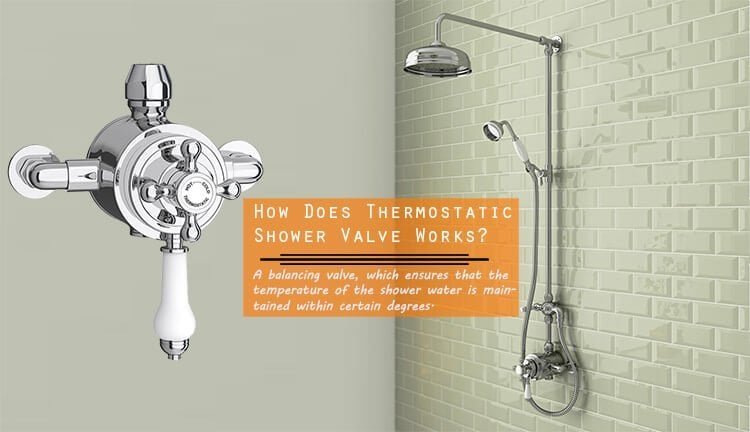
A thermostatic shower valve is a shower control that holds the water at the exact temperature you set, even when someone flushes a toilet, starts the washing machine or turns on the kitchen tap. Instead of a sudden blast of hot or cold, the water stays steady within a degree or two. That makes a thermostatic shower valve one of the best safety and comfort upgrades you can make, especially in homes with children, older adults or busy morning routines.
This 2026 guide explains what a thermostatic shower valve is, how it works inside, how it compares with a standard pressure-balance valve and who should consider one. If you’re deciding between concealed and exposed styles, see our companion guide: concealed vs. exposed thermostatic shower valves.
Quick answer: A thermostatic shower valve contains a temperature-sensitive element (usually wax or a bimetal coil) that expands and contracts as water temperature changes, moving a piston that automatically adjusts the mix of hot and cold water. The result is a constant temperature and built-in anti-scald protection.
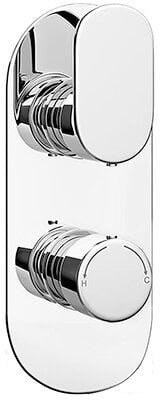
How does a thermostatic shower valve work?
Inside the valve is a thermostatic cartridge with three key parts:
- A thermostatic element: most often a wax capsule that expands as it warms and contracts as it cools; some valves use a bimetallic strip.
- A shuttle or piston: connected to the element, it slides to open the hot inlet and close the cold inlet (or the reverse).
- A temperature dial: sets the target temperature by adjusting the element’s position.
When you set the dial to, say, 100°F, the cartridge mixes hot and cold water to reach that temperature. If the cold supply suddenly drops because someone flushes a toilet, the mixed water starts to get hotter; the wax expands within a fraction of a second, pushing the shuttle to reduce hot water and restore the set temperature. Most thermostatic shower valves also have a safety stop at around 100 to 104°F that you must press to go hotter, and they shut off the hot supply if cold water fails completely.
Thermostatic vs. pressure-balance shower valves
| Feature | Thermostatic valve | Pressure-balance valve |
|---|---|---|
| What it monitors | Actual water temperature | Pressure ratio of hot to cold |
| Temperature accuracy | Within about 1–2°F | Within a few degrees |
| Separate volume control | Usually yes | Usually no (one handle does both) |
| Flow capacity | High; supports multiple outlets | Usually one or two outlets |
| Anti-scald protection | Yes, plus hot limit button | Yes |
| Cost | Higher | Lower |
A pressure-balance valve is a good, affordable choice for most showers. A thermostatic shower valve is better when you want precise temperature, separate volume control or multiple outlets such as a rain head, handshower and body sprays. Learn more in our best shower valve guide.
Benefits of a thermostatic shower valve
- Safety: protects against scalding, which is especially important for children and older adults.
- Comfort: no more temperature swings mid-shower.
- Set it and forget it: leave the temperature dial where you like it and simply turn the flow on and off.
- Higher flow: supports large showerheads and multiple outlets.
- Efficiency: you waste less water adjusting the temperature each time.
Drawbacks to consider
- Higher cost for the valve and trim
- Professional installation recommended, since the valve sits inside the wall
- Cartridges can clog in hard water and need periodic cleaning or replacement
- Some models need minimum water pressure on both hot and cold supplies
Types of thermostatic shower valves
- Concealed: the valve body is inside the wall and only the trim shows. Clean, built-in look.
- Exposed: the valve sits on the wall surface, often with a riser rail. Easier to install and service.
- Sequential: one handle that turns on cold first, then progresses to hot.
- Dual control: one handle for temperature and one for flow or outlet selection.
- Thermostatic shower panels: pre-plumbed towers with a built-in thermostatic mixer; see our best shower panel picks.
Is a thermostatic shower valve right for your home?
A thermostatic shower valve is usually worth the extra cost if any of these apply to you:
- Young children or older adults use the shower, and scald protection is a top priority.
- Several people shower back to back and want to keep a favorite temperature without readjusting.
- You want multiple outlets, such as a rain head and handshower, or body sprays.
- Your water pressure fluctuates when other fixtures run, causing temperature swings.
- You’re remodeling anyway, so the wall will be open and the extra installation cost is small.
If you have a simple shower with one showerhead, steady pressure and a tight budget, a quality pressure-balance valve may be all you need. Many brands let you start with a pressure-balance trim and upgrade later; for example, Delta’s TempAssure 17T trims fit the same MultiChoice valve as its standard trims.
Where thermostatic shower valves make the biggest difference
In older homes with undersized supply pipes, flushing a toilet can drop cold-water pressure enough to make a standard shower noticeably hotter. A thermostatic shower valve reacts to the actual temperature rather than pressure, so it smooths out these swings more precisely. It’s also ideal for households with large tankless or high-capacity water heaters that deliver very hot water quickly.
Popular thermostatic shower valves and trims
1. Kohler Rite-Temp Thermostatic Valve Kit (K28304-KS)
A thermostatic valve body and cartridge with service stops and check valves.
- IncludesValve body, thermostatic cartridge, guides
- Connections1/2 in NPT and sweat
- StopsInstalled, with check valves
- Flow9 gpm at 45 psi
- TrimsKohler thermostatic trims
- BrandKohler
Pros
- Cartridge and stops included
- High flow for multiple outlets
- Universal connections
Cons
- Kohler trims only
- Professional install recommended
2. Delta TempAssure 17T Series Trim (Lahara)
A thermostatic-style dual-function trim for Delta MultiChoice valves.
- CartridgeDual-function thermostatic
- ValveDelta MultiChoice (sold separately)
- FinishesChrome and others
- ControlsTemperature + volume
- StyleLahara
- BrandDelta
Pros
- Upgrade on a MultiChoice valve
- Separate temperature and volume
- Several finishes
Cons
- Valve sold separately
- Single-outlet use
3. Moen M-CORE 4-Series Thermostatic Trim (Align)
A two-handle thermostatic trim with volume control for Moen M-CORE valves.
- ValveM-CORE mixing valve required
- ControlsTemperature + volume
- StyleAlign
- FinishBrushed nickel
- FunctionThermostatic
- BrandMoen
Pros
- True thermostatic control
- Matches Align fixtures
- Volume control
Cons
- Requires M-CORE valve
- Premium price
4. hansgrohe Ecostat Modern Thermostatic Trim
A concealed thermostatic trim with a diverter for a showerhead and handshower.
- Outlets2 (diverter)
- CartridgeThermostatic
- SafetyHot-limit button
- Rough-inhansgrohe iBox
- FinishChrome
- Brandhansgrohe
Pros
- Precise German thermostat
- Diverter for two outlets
- Safety stop button
Cons
- Requires iBox rough-in
- Expensive
Installing a thermostatic valve: what to expect
Most concealed thermostatic valves are installed inside the wall, just like a standard shower valve, so upgrading usually means opening the wall from behind or removing some tile. The installer secures the valve body to blocking between the studs at the correct depth, connects hot to the left and cold to the right, and runs outlets to each showerhead, handshower or body spray. Many thermostatic valves include integrated stops and check valves that prevent hot and cold water from crossing between supply lines.
Because these valves handle higher flow and often feed several outlets, it’s important to size the supply lines properly and make sure your water heater can keep up. A tankless or high-recovery heater may be worth considering for large multi-outlet showers; see our best tankless water heater guide. If you’re not comfortable soldering or crimping supply lines, hire a licensed plumber, and add an access panel so the cartridge can be serviced later. For a step-by-step look at the process, read replacing a shower valve behind the wall.
How to maintain a thermostatic shower valve
- Run the temperature dial through its full range every few weeks to keep the cartridge moving freely.
- Clean inlet filters or check valves once or twice a year, especially in hard-water areas.
- Descale or replace the cartridge if the temperature becomes unstable or flow drops.
- Recalibrate the temperature dial if the set point drifts; most manufacturers explain how in the instructions.
Thermostatic shower valve FAQs
What is a thermostatic shower valve?
It’s a shower valve that automatically maintains a set water temperature using a temperature-sensitive cartridge, protecting against sudden hot or cold changes.
Is a thermostatic shower valve worth it?
For many homes, yes. It offers more precise temperature control, separate volume control and strong anti-scald protection, and it’s ideal for multi-outlet showers.
Can I add a thermostatic valve to my existing shower?
Sometimes. Delta TempAssure trims fit Delta MultiChoice valves, and some brands offer thermostatic trims for their universal valves. Otherwise, the valve must be replaced inside the wall.
Do thermostatic valves need high water pressure?
Many work at normal household pressure, but some require balanced hot and cold supplies. Check the manufacturer’s minimum pressure specs.
How long does a thermostatic cartridge last?
Typically 5 to 10 years or more, depending on water hardness. Cleaning filters and descaling helps extend its life.
What temperature should a thermostatic shower be set to?
Most people are comfortable around 100 to 104°F. Many valves have a safety stop at about 100°F to prevent accidental scalding.
Final thoughts
A thermostatic shower valve keeps your shower at a steady, safe temperature, gives you separate volume control and supports larger, multi-outlet showers. It costs more than a pressure-balance valve, but for families, spa-style bathrooms and anyone tired of temperature swings, it’s a worthwhile upgrade.