Kitchen Bath Picks is reader-supported. When you buy through links on this page, we may earn an affiliate commission at no extra cost to you. Learn more.
In this guide
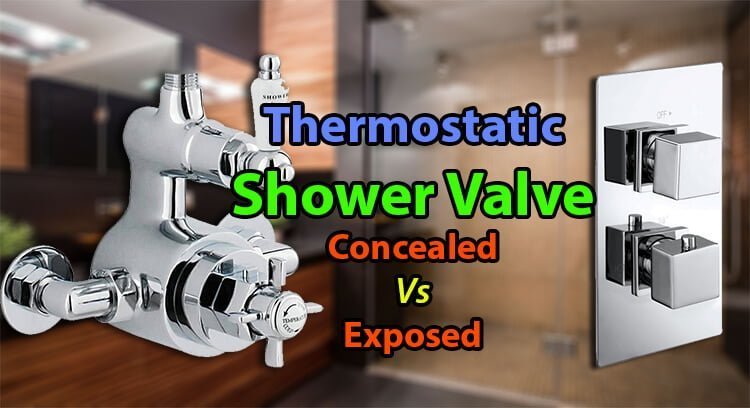
Once you’ve decided a thermostatic shower valve is right for your bathroom, the next question is which style to choose: concealed, with the valve hidden inside the wall, or exposed, with the valve mounted on the wall surface. Both keep your shower at a steady, safe temperature, but they differ a lot in looks, installation cost and ease of maintenance. This 2026 guide compares concealed and exposed thermostatic shower valves side by side and walks you through the other features that matter when choosing one.
New to thermostatic valves? Start with our explainer, what is a thermostatic shower valve and how does it work.
Quick answer: Choose a concealed thermostatic shower valve for a sleek, built-in look during a remodel. Choose an exposed thermostatic shower valve (or thermostatic shower panel) when you want a faster, cheaper installation without opening the wall, or easy access for servicing.

Concealed vs. exposed thermostatic shower valves at a glance
| Factor | Concealed valve | Exposed valve |
|---|---|---|
| Look | Clean, minimal; only trim visible | Visible valve bar and pipework |
| Installation | Inside the wall; usually requires opening the wall | Surface mounted; often uses existing supply lines |
| Typical cost | Higher (more labor) | Lower |
| Servicing | Access through trim or an access panel | Easy; the valve is in reach |
| Best for | Remodels and new builds | Quick upgrades, rentals, tiled walls |
| Outlets | Easily supports several outlets | Usually one or two outlets |
| Style options | Very wide | More limited |
Concealed thermostatic shower valves
A concealed thermostatic shower valve sits inside the wall cavity, just like a standard shower valve. On the shower side you see only the trim: a temperature dial, a volume or diverter control and the showerheads.
Pros
- Sleek, built-in appearance that suits modern and luxury bathrooms
- Pipework hidden, so the shower is easier to clean
- Supports multiple outlets such as rain heads, handshowers and body sprays
- Huge range of trim styles and finishes
Cons
- Requires opening the wall or installing during a remodel
- Higher labor cost
- Servicing the cartridge may need an access panel
Exposed thermostatic shower valves
An exposed thermostatic shower valve, often called a bar valve, mounts on the surface of the shower wall. Thermostatic shower panels and towers are a popular exposed option in the US; they combine the thermostatic mixer with a rain head, handshower and body jets in one unit.
Pros
- Faster, cheaper installation, often without opening the wall
- Easy to reach for cleaning and cartridge replacement
- Great for retrofits on finished tile walls and rentals
- Panels add spa features without new pipes
Cons
- Visible pipework and valve body
- Fewer design options than concealed trims
- Takes up some shower space
Other features to compare when choosing a thermostatic shower valve
Number of outlets and diverter
Decide how many outlets you want: a single showerhead, a showerhead and handshower, or a full system with body sprays. Valves with two or more outlets need a diverter or separate volume controls.
Controls: sequential, dual or triple
Sequential valves use one handle that runs from cold to hot. Dual-control valves have separate temperature and flow handles. Triple-control valves add a third handle for the diverter. Dual controls are the most popular because you can leave the temperature set and simply turn the flow on and off.
Flow rate and water pressure
Check the valve’s flow rate at your home’s pressure, especially for rain heads and multiple outlets. Some thermostatic valves need balanced hot and cold pressure; if you have a gravity-fed or low-pressure system, choose a model rated for it.
Safety features
Look for a hot-limit stop (usually around 100 to 104°F) with an override button, automatic shut-off if the cold supply fails and check valves that prevent cross-flow between hot and cold lines.
Brand compatibility
Concealed valves and trims must come from the same family. Kohler, Moen, Delta and hansgrohe each have their own thermostatic platforms. Compare options in our best shower valve guide.
Thermostatic shower valve options to consider
1. Kohler Rite-Temp Thermostatic Valve Kit (K28304-KS)
A concealed thermostatic valve body and cartridge with integrated stops and check valves.
- StyleConcealed
- IncludesValve, cartridge, guides
- StopsInstalled, with check valves
- Flow9 gpm at 45 psi
- Connections1/2 in NPT and sweat
- BrandKohler
Pros
- High flow for multiple outlets
- Service stops included
- Universal connections
Cons
- Requires opening the wall
- Kohler trims only
2. hansgrohe Ecostat Modern Thermostatic Trim
A concealed thermostatic trim with a diverter for two outlets.
- StyleConcealed
- Outlets2
- SafetyHot-limit button
- Rough-inhansgrohe iBox
- FinishChrome
- Brandhansgrohe
Pros
- Precise thermostat
- Two-outlet diverter
- Modern design
Cons
- iBox required
- Premium price
3. Signature Hardware Shelton Thermostatic Panel
An exposed stainless thermostatic panel with handshower and four body sprays.
- StyleExposed panel
- ValveThermostatic
- MaterialStainless steel
- OutletsHead, handshower, 4 body sprays
- InstallSurface mount
- Warranty10-year limited
Pros
- No need to open the wall
- Many outlets in one unit
- Long warranty
Cons
- Visible on the wall
- Requires suitable supply connections
4. Achelous Thermostatic Shower Panel
A budget-friendly exposed thermostatic panel in 304 stainless steel.
- StyleExposed panel
- ValveThermostatic, brass
- Material304 stainless
- FunctionsRain, jets, handheld, waterfall
- InstallPre-plumbed, flat walls
- Warranty3 years
Pros
- Affordable thermostatic control
- Rust-proof stainless
- Easy retrofit
Cons
- Lesser-known brand
- Square style only
Thermostatic shower valve FAQs
Is a concealed or exposed thermostatic shower valve better?
Neither is better overall. Concealed valves look cleaner and support more outlets but cost more to install. Exposed valves are cheaper, faster to fit and easier to service.
Can I install a thermostatic shower valve without removing tile?
Yes, with an exposed thermostatic valve or panel that connects to your existing supply outlets. A concealed valve usually requires opening the wall.
Do exposed thermostatic shower valves look outdated?
Not necessarily. Modern exposed valves and stainless shower panels have clean, contemporary designs, though they’re more visible than concealed trims.
How many outlets can a thermostatic shower valve run?
It depends on the valve’s flow rate and diverter. Many concealed valves support two to three outlets; exposed bar valves usually support one or two.
Are thermostatic shower valves hard to maintain?
No. Clean the inlet filters periodically and descale or replace the cartridge if the temperature becomes unstable. Exposed valves are easier to reach.
Which thermostatic shower valve brands are reliable?
Kohler, Moen, Delta, hansgrohe and Grohe are well-established brands with good parts availability.
Final thoughts
If you’re remodeling and want a seamless look with multiple outlets, choose a concealed thermostatic shower valve. If you want a quicker, lower-cost upgrade with easy servicing, choose an exposed thermostatic shower valve or a thermostatic shower panel. Either way, you’ll enjoy steady temperatures and built-in scald protection every time you shower.