Kitchen Bath Picks is reader-supported. When you buy through links on this page, we may earn an affiliate commission at no extra cost to you. Learn more.
In this guide
- Why does a sink drain clog?
- Signs of a clogged sink drain
- Fix 1: Boiling or hot water (for grease and soap)
- Fix 2: Baking soda and vinegar
- Fix 3: Plunge the clogged sink drain
- Fix 4: Remove and clean the drain trap
- Fix 5: Use a drain snake
- Clearing a clogged bathroom sink drain stopper
- Clearing a clogged kitchen sink drain with a garbage disposal
- Tools for clearing a clogged sink drain
- How to prevent a clogged sink drain
- When to call a plumber
- Clogged sink drain FAQs
- Final thoughts
A clogged sink drain always seems to happen at the worst time: right after a big dinner, or when you’re getting ready in the morning. The water rises, drains at a crawl, and sometimes brings a sour smell with it. Most of the time the blockage is sitting in the drain trap, the curved pipe under the sink, which is exactly where it’s easiest to reach. With a plunger, a bucket and a little patience, you can usually clear a clogged sink drain yourself in under an hour, without harsh chemicals or a service call.
This 2026 guide covers why sinks clog, the gentlest fixes to try first, how to remove and clean the drain trap, and when to use a drain snake or call a plumber.
Quick answer: Remove standing water, then try a sink plunger. If that fails, place a bucket under the trap, loosen the slip nuts, remove the trap and clean it out. Reassemble and test. If the drain still clogs, the blockage is further down the line: use a drain snake through the trap arm or call a plumber.

Why does a sink drain clog?
| Sink | Common causes |
|---|---|
| Kitchen sink | Grease and oil, food scraps, coffee grounds, rice and pasta, eggshells, soap residue |
| Bathroom sink | Hair, toothpaste, soap scum, shaving cream, cosmetics |
| Any sink | Small objects, mineral buildup from hard water, a damaged or poorly sloped trap |
Signs of a clogged sink drain
- Water drains slowly or stands in the sink
- Gurgling sounds when the sink drains
- Bad smells coming from the drain
- Water backing up into the second bowl of a double sink
- Several fixtures draining slowly at once (a sign of a main line problem, not just the trap)
Safety first: Avoid chemical drain cleaners, especially if you plan to take the trap apart. They can burn skin and eyes, damage some pipes and splash when you open the trap. If you have already used one, wear gloves and eye protection, and tell any plumber you call.
Fix 1: Boiling or hot water (for grease and soap)
For a slow drain caused by soap or light grease, pour a kettle of very hot water slowly into the drain in two or three stages. Use hot tap water rather than boiling water if you have PVC pipes or a porcelain sink, as boiling water can soften plastic joints and crack porcelain.
Fix 2: Baking soda and vinegar
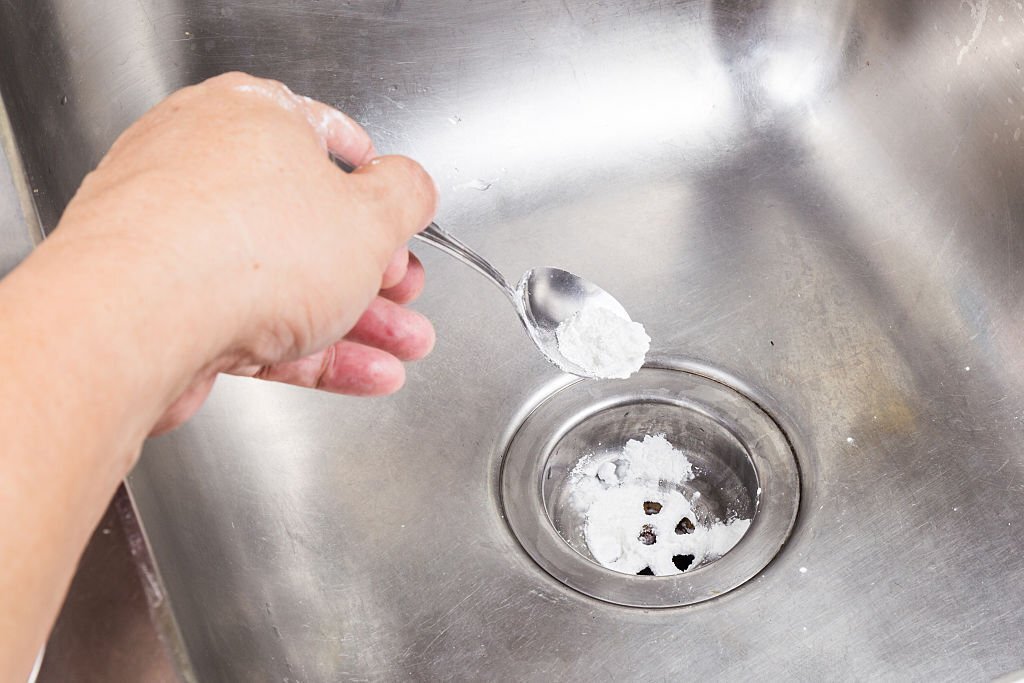
- Remove standing water from the sink.
- Pour about 1/2 cup of baking soda into the drain.
- Follow with 1 cup of white vinegar and cover the drain.
- Wait 15 to 30 minutes, then flush with hot water.
This is best for minor buildup and odors. It won’t clear a solid blockage, but it’s gentle on pipes.
Fix 3: Plunge the clogged sink drain
- Leave a few inches of water in the sink so the plunger cup is covered.
- For double sinks, plug the other drain with a stopper or wet cloth. In bathrooms, cover the overflow hole.
- Seal the plunger over the drain and pump firmly 10 to 15 times, then pull up sharply.
- Repeat a few times, then run water to check.
Use a flat-bottomed sink plunger, not a flanged toilet plunger. If the sink has a garbage disposal, make sure it’s off and the dishwasher hose is clamped or the dishwasher isn’t running.
Fix 4: Remove and clean the drain trap
If plunging doesn’t work, the clog is probably packed in the trap. This step clears most clogged sink drains for good.
- Clear out the cabinet and place a bucket directly under the trap. Put on gloves.
- Loosen the two slip nuts on either side of the curved J-bend by hand or with tongue-and-groove pliers.
- Remove the trap carefully and empty the water and debris into the bucket.
- Clean the trap with a bottle brush or old toothbrush and hot soapy water. Check the tailpiece and trap arm for buildup too.
- Inspect the washers and nuts. Replace cracked parts or the whole trap if needed; see how to replace a sink P-trap.
- Reinstall the trap, hand-tighten the nuts plus a quarter turn, and run water to check for leaks.
Fix 5: Use a drain snake
If the trap is clean but the sink still clogs, the blockage is in the branch line inside the wall. With the trap removed, feed a hand auger (drain snake) into the trap arm or wall pipe. Turn the handle clockwise as you push to break up or hook the clog, then pull it back out. Reinstall the trap and flush with hot water.
Clearing a clogged bathroom sink drain stopper
In bathroom sinks, hair often wraps around the pop-up stopper. Before taking the trap apart, try this: look under the sink for the horizontal pivot rod attached to the back of the drain pipe. Unscrew its retaining nut, pull the rod out, and lift the stopper straight up. Clean the hair and gunk from the stopper and drain opening with a paper towel or a plastic drain cleaning strip, then reinstall the stopper and pivot rod. Many slow bathroom drains are fixed in five minutes this way.
Clearing a clogged kitchen sink drain with a garbage disposal
If the disposal side won’t drain, turn off the disposal and unplug it or switch off its breaker. Check that the disposal isn’t jammed: many models have a hex socket on the bottom that you can turn with the included wrench to free the blades, plus a reset button. Then plunge the disposal side while the other bowl is plugged. If water still stands, the clog is usually in the trap or the disposal’s discharge pipe, which you can remove and clean like the trap. Never reach into the disposal with your hand.
Tools for clearing a clogged sink drain
1. Luigi’s Sink Plunger
A bellows-style plunger designed for kitchen and bathroom sinks.
- TypeBellows sink plunger
- UseSinks, tubs, showers
- MaterialPlastic
- DesignTwo cup sizes
- BrandLuigi’s
- CleaningRinse and spray
Pros
- Strong suction for sinks
- Compact
- Easy to clean
Cons
- Not for toilets
- Needs a good seal
2. 25 ft Drain Auger with Drill Adapter
A 25-foot hand drain snake that also works with a power drill.
- Length25 ft
- UseSinks, tubs, showers
- PowerManual or drill
- HousingABS drum
- CableSteel spring
- IncludesDrill adapter
Pros
- Reaches clogs in the wall
- Manual or drill power
- Affordable
Cons
- Can scratch sinks; use carefully
- Wear gloves; it gets messy
3. Channellock 432 Tongue and Groove Pliers
10-inch pliers for loosening stubborn slip nuts.
- Length10 in
- JawRight-angle, heat-treated teeth
- DesignTongue and groove
- FastenerPermaLock
- BrandChannellock
- Made inUSA
Pros
- Strong grip
- Durable
- Useful for many plumbing jobs
Cons
- Can scratch chrome; use a cloth
- Too large for tiny nuts
How to prevent a clogged sink drain
- Never pour grease or oil down the drain; let it cool and throw it away.
- Use a strainer in kitchen sinks and a hair catcher in bathroom sinks. See our best sink strainer guide.
- Scrape plates into the trash before rinsing.
- Run hot water for 30 seconds after using the sink.
- Use baking soda and vinegar once a month to reduce buildup.
- Keep coffee grounds, eggshells and fibrous scraps out of the garbage disposal.
When to call a plumber
Call a licensed plumber if more than one fixture is clogged, water backs up into other drains, you smell sewage, the clog returns quickly after clearing, or you can’t reach it with a hand snake. These signs often point to a main sewer line or vent problem that needs professional equipment.
Clogged sink drain FAQs
What is the fastest way to unclog a sink drain?
A sink plunger is usually fastest. If it doesn’t work, removing and cleaning the drain trap clears most clogs.
Do baking soda and vinegar unclog drains?
They help with minor buildup and odors, but they won’t clear a solid blockage. Use a plunger or clean the trap for serious clogs.
Are chemical drain cleaners safe?
They can damage pipes and are dangerous to skin and eyes. Mechanical methods like plungers and snakes are safer and often more effective.
How do I unclog a kitchen sink with standing water?
Bail out most of the water, then plunge. If that fails, place a bucket under the trap and remove it to clear the clog.
Why does my sink drain keep clogging?
Repeated clogs usually come from grease buildup, a poorly sloped trap arm or a partial blockage further down the line. Clean the trap and snake the line, or call a plumber.
Can I use a plunger on a sink with a garbage disposal?
Yes. Turn off the disposal first, plug the other bowl and plunge the clogged side. Never put your hand in the disposal.
Final thoughts
A clogged sink drain is usually a simple fix. Start with hot water or baking soda and vinegar, move to a plunger, and if needed remove and clean the drain trap. A hand snake handles clogs deeper in the wall. With a strainer and good habits, you can keep your drains running freely.