Kitchen Bath Picks is reader-supported. When you buy through links on this page, we may earn an affiliate commission at no extra cost to you. Learn more.
In this guide
- The alchemy of materials in professional chef's cookware
- Why professional chef's cookware uses these materials
- Adaptability and versatility
- Building your own professional chef's cookware collection
- Mastery of thermal control
- Choosing professional chef's cookware for even heat
- Caring for professional chef's cookware
- Professional chef's cookware for your kitchen
- FAQs about professional chef's cookware
- Final thoughts
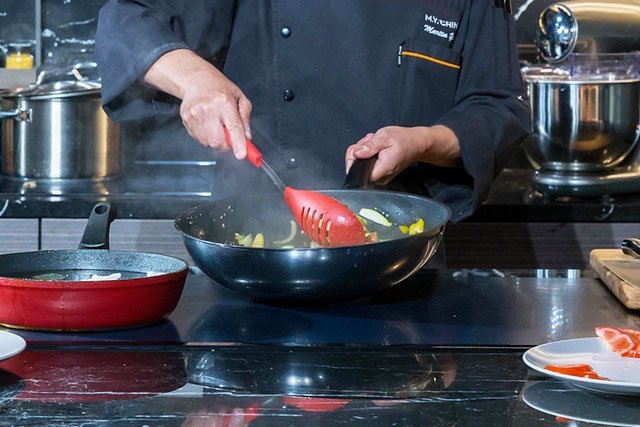
Walk into a busy restaurant kitchen and you won’t see matching sets of nonstick pans. You’ll see dented stainless sauté pans, black carbon steel skillets, heavy cast iron and a few enameled pots that have been used every day for years. Professional chef’s cookware is chosen for one reason: it performs reliably under high heat, day after day. The good news is that the same materials are available to home cooks, and understanding why chefs choose them helps you build a kitchen that cooks better and lasts longer.
Quick answer: Professional chef’s cookware is mostly tri-ply stainless steel (for versatile, even cooking and sauces), carbon steel (for high-heat searing and a natural nonstick surface), cast iron (for heat retention), enameled cast iron (for braising and acidic dishes) and sometimes copper (for precise heat control). Chefs choose pieces individually based on the job rather than buying full sets, and they prioritize durability, oven-safe handles and even heat.
The alchemy of materials in professional chef’s cookware
| Material | Strengths | Weaknesses | Best for |
|---|---|---|---|
| Tri-ply stainless steel | Even heat, durable, non-reactive, oven-safe | Food can stick without proper preheating | Sautéing, searing, pan sauces |
| Carbon steel | Heats fast, very high heat, develops seasoning | Needs seasoning; reacts to acids | Searing, stir-frying, eggs once seasoned |
| Cast iron | Excellent heat retention, durable | Heavy, slow to heat, needs seasoning | Searing, baking, cornbread |
| Enameled cast iron | Holds heat, non-reactive, easy to clean | Heavy, enamel can chip | Braising, soups, stews |
| Copper (lined) | Fastest, most precise heat response | Expensive, needs polishing | Sauces, sugar work |
| Nonstick | Easy release, easy cleaning | Lower heat limits, wears out | Eggs, delicate fish |
Why professional chef’s cookware uses these materials
Stainless steel: the workhorse
Tri-ply or fully clad stainless steel pans have an aluminum core sandwiched between stainless layers. Aluminum spreads heat evenly; stainless is durable, non-reactive and dishwasher-safe. Stainless creates fond, the browned bits that make pan sauces, which is why chefs love it. The key to preventing sticking is preheating the pan, then adding oil, then food.
Carbon steel: the restaurant secret
Carbon steel is lighter than cast iron and heats faster, making it ideal for searing steaks, stir-frying and cooking eggs once seasoned. With use, it develops a slick, natural nonstick patina. It needs to be dried promptly and lightly oiled to prevent rust.
Cast iron: heat that holds
Cast iron retains heat brilliantly, which makes it excellent for searing, frying and baking. It’s affordable and nearly indestructible. It heats slowly and unevenly, so preheat gradually.
Enameled cast iron: the braiser
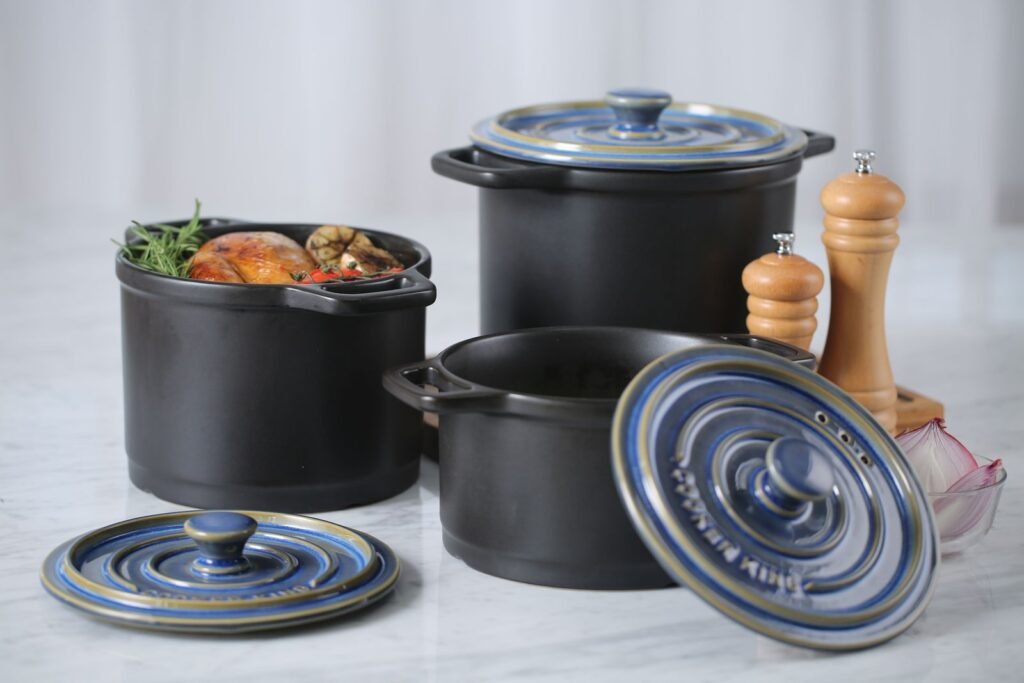
Enameled Dutch ovens combine cast iron’s heat retention with a non-reactive, easy-clean surface, perfect for braises, soups, stews and bread.
Nonstick: a specialist, not the main tool
Chefs keep a nonstick pan for eggs and delicate fish but rarely rely on it for everything. Use low to medium heat and wooden or silicone utensils, and replace it when the coating wears. If you’re curious about coatings, read our guide to whether ceramic cookware is safe.
Adaptability and versatility
Chefs value pans that do many jobs. A 12-inch stainless skillet sears, sautés and makes sauces; a carbon steel pan handles high-heat cooking; a Dutch oven braises, boils and bakes. Look for oven-safe handles and lids so pans move from stovetop to oven, and check induction compatibility if you have an induction cooktop.
Building your own professional chef’s cookware collection
Instead of buying a large set, start with a few versatile pieces and add others as your cooking evolves:
- A 12-inch tri-ply stainless steel skillet
- A 10- to 12-inch carbon steel or cast iron skillet
- A 5- to 7-quart enameled Dutch oven
- A 3-quart saucepan
- A large stockpot
- An 8- to 10-inch nonstick pan for eggs
Store pans where you can reach them easily; a pot rack keeps heavy cookware accessible and protects surfaces.
Mastery of thermal control
Great cookware is only half of great results; the other half is heat control. Preheat pans properly, avoid overcrowding, which steams food instead of searing it, and adjust the burner as you go. Thicker-bottomed and clad pans resist hot spots. A thermometer helps you hit safe and perfect internal temperatures; see the benefits of smart technology in your kitchen for wireless options.
Choosing professional chef’s cookware for even heat
- Choose fully clad (tri-ply or 5-ply) construction over thin, disc-bottom pans.
- Look for a heavy, flat base that sits evenly on the burner.
- Match pan size to burner size.
- Choose riveted handles for durability.
Caring for professional chef’s cookware
- Stainless: soak stuck-on food, use a stainless cleaner for discoloration and avoid steel wool on polished exteriors.
- Carbon steel and cast iron: wash with hot water and a little soap if needed, dry immediately and apply a thin coat of oil.
- Enameled cast iron: avoid sudden temperature changes and metal scouring pads.
- Nonstick: hand wash, avoid high heat and metal utensils.
- Copper: polish occasionally and have tin linings re-tinned when worn.
Professional chef’s cookware for your kitchen
1. All-Clad D3 Stainless Steel 12-Inch Fry Pan with Lid
A tri-ply stainless steel fry pan with a lid, made in the USA, prized for even heat and durability.
- Size12 in
- ConstructionTri-ply (D3) stainless steel
- IncludesLid
- Oven-safeYes, check manufacturer limits
- BrandAll-Clad
Pros
- Even heat and great fond for sauces
- Very durable
- Induction compatible
Cons
- Food sticks without proper preheating
- Higher cost
Who it’s best for
Everyday searing, sautéing and pan sauces.
Good to know before you buy
Preheat properly to prevent sticking, and expect a premium price.
2. de Buyer Mineral B Carbon Steel Fry Pan, 12.5-Inch
A French carbon steel pan that heats fast, handles high heat and builds a natural nonstick patina.
- Diameter12.5 in (9 in cooking surface)
- MaterialCarbon steel with beeswax coating
- HeatVery high heat capable
- InductionYes
- Brandde Buyer
Pros
- Superb searing
- Natural nonstick with seasoning
- Lasts for generations
Cons
- Needs seasoning and drying
- Reacts with acidic foods
Who it’s best for
High-heat searing and cooks who enjoy building seasoning.
Good to know before you buy
It must be seasoned, dried promptly and kept away from long acidic simmers.
3. Lodge Pre-Seasoned Cast Iron Skillet, 12-Inch
A classic pre-seasoned cast iron skillet with a silicone handle holder.
- Size12 in
- MaterialCast iron
- SeasoningPre-seasoned
- IncludesSilicone handle holder
- BrandLodge
Pros
- Excellent heat retention
- Affordable and durable
- Stove, oven and grill
Cons
- Heavy
- Needs seasoning care
Who it’s best for
Affordable heat retention for searing, frying and baking.
Good to know before you buy
It’s heavy and needs regular seasoning care.
4. Le Creuset Enameled Cast Iron Round Dutch Oven, 5.5 Qt
An enameled cast iron Dutch oven for braising, soups, stews and bread.
- Capacity5.5 qt
- MaterialEnameled cast iron
- ShapeRound
- ColorCerise (other colors available)
- BrandLe Creuset
Pros
- Even, steady heat
- Non-reactive enamel
- Heirloom quality
Cons
- Heavy
- Premium price
Who it’s best for
Braises, soups, stews and bread baking.
Good to know before you buy
It’s heavy, and the enamel can chip if dropped.
5. Tramontina Signature Tri-Ply Clad Stainless Steel 12-Piece Set
A tri-ply clad stainless set that covers most cooking tasks at a value price.
- Pieces12
- ConstructionTri-ply clad stainless steel
- InductionYes
- Oven-safeYes, check limits
- BrandTramontina
Pros
- Professional construction at a lower price
- Versatile pieces
- Durable
Cons
- Sets include pieces you may not use
- Handles can get warm
Who it’s best for
Building a full stainless kitchen on a budget.
Good to know before you buy
Sets include some pieces you may rarely use.
FAQs about professional chef’s cookware
What cookware do professional chefs use most?
Tri-ply stainless steel and carbon steel pans are the most common, along with cast iron and enameled Dutch ovens.
Is stainless steel or nonstick better?
Stainless is more durable and better for searing and sauces; nonstick is best for eggs and delicate foods.
Is carbon steel better than cast iron?
Carbon steel is lighter and heats faster; cast iron holds heat longer. Both need seasoning.
Should I buy a cookware set or individual pieces?
Many chefs prefer individual pieces chosen for specific tasks, but a quality tri-ply set can be good value.
How do I keep food from sticking to stainless steel?
Preheat the pan, add oil, let it shimmer, then add food and don’t move it until it releases.
How long does quality cookware last?
Well-cared-for stainless, cast iron, carbon steel and enameled cast iron can last decades.
Final thoughts
The choice behind professional chef’s cookware is simple: materials that handle high heat, cook evenly and last for years. Start with a tri-ply stainless skillet, a carbon steel or cast iron pan and an enameled Dutch oven, then add pieces as your cooking grows. Learn to control heat, care for each material properly and your cookware will reward you with restaurant-quality results at home. For more kitchen essentials, see our guide to essential kitchen appliances.