Kitchen Bath Picks is reader-supported. When you buy through links on this page, we may earn an affiliate commission at no extra cost to you. Learn more.
In this guide
- Where should you use wallpaper in your kitchen?
- How to choose wallpaper in your kitchen
- Popular wallpaper styles for kitchens in 2026
- Installing wallpaper in your kitchen
- Caring for wallpaper in your kitchen
- What is the best wallpaper for the kitchen? Our picks
- FAQs about wallpaper in your kitchen
- Final thoughts
Wallpaper is back, and the kitchen is one of the most fun places to use it. A bold botanical behind open shelving, a subtle grasscloth texture in a breakfast nook or a graphic print inside a pantry can give a kitchen personality that paint alone rarely does. Modern washable vinyls and peel-and-stick papers have also solved most of the old worries about steam, splashes and grease.
This guide shows where you should add wallpaper in your kitchen to make it pop, how to choose a paper that will hold up and how to install it so it lasts.
Quick answer: The best places for wallpaper in your kitchen are an accent wall, a breakfast nook or dining area, behind open shelving, the back of glass-front cabinets, the ceiling, a pantry or a kitchen island. Avoid areas right behind the stove or sink unless the paper is protected. Choose scrubbable vinyl or a peel-and-stick vinyl for kitchens, prime the wall properly and keep the room well ventilated.

Where should you use wallpaper in your kitchen?
| Location | Why it works | Moisture or grease risk |
|---|---|---|
| Accent wall | Creates a focal point without overwhelming | Low to moderate |
| Breakfast nook or dining area | Defines the space and adds warmth | Low |
| Behind open shelving | Adds depth and frames dishes | Low to moderate |
| Inside glass-front cabinets | Small, budget-friendly surprise | Very low |
| Ceiling | Unexpected “fifth wall” | Moderate near the cooktop |
| Pantry or butler’s pantry | Bold pattern in a small space | Low |
| Kitchen island back or sides | Adds pattern at eye level | Low (watch for scuffs) |
| Backsplash (protected) | Pattern behind clear glass or acrylic | High without protection |
1. An accent wall
Choose the wall without cabinets or appliances, often the end wall or the wall beside a window. One papered wall draws the eye and works with almost any style.
2. A breakfast nook or dining area
Papering the dining corner separates it visually from the work zone and makes it feel like its own cozy room. This is one of the safest spots for wallpaper in your kitchen because it’s away from steam and splashes.
3. Behind open shelving
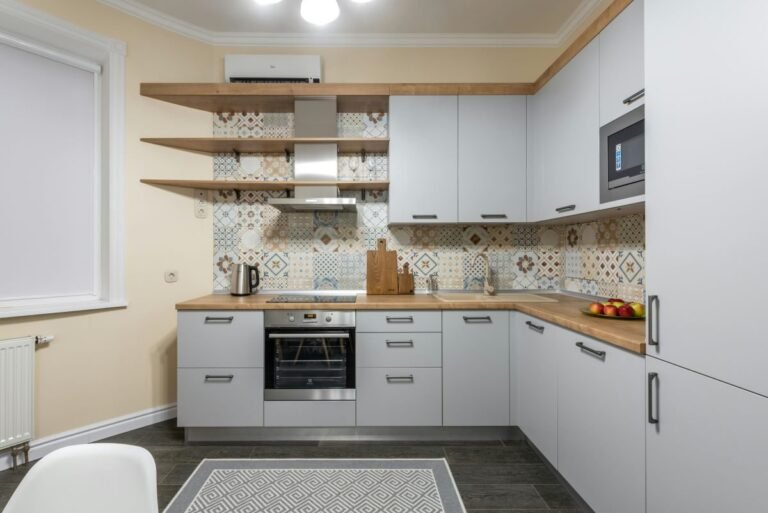
A patterned or textured backdrop behind open shelves makes plates, glassware and plants stand out.
4. Inside glass-front or open cabinets
Lining the back of a cabinet takes only a small amount of paper and is an easy way to try a bold print.
5. The ceiling
Papering the ceiling adds drama, especially in kitchens with plain white cabinets. Keep it away from the area directly above the range, and make sure your kitchen exhaust fan vents well.
6. The pantry
Pantries are perfect for a daring pattern you might not want everywhere.
7. The kitchen island
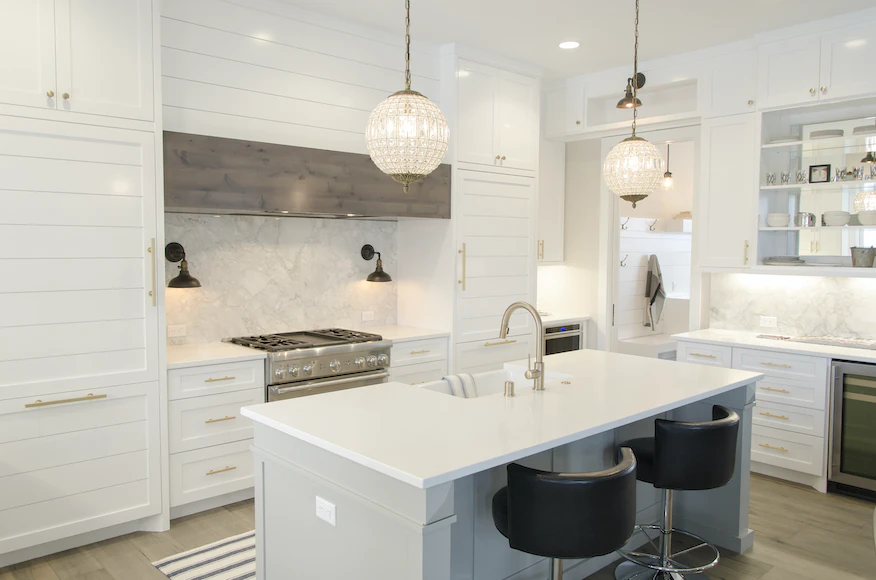
Paper the back panel of an island and seal it or use a scrubbable vinyl, as it’s prone to scuffs from stools and feet.
8. A protected backsplash
Wallpaper can work as a backsplash only if it’s behind clear tempered glass or acrylic. Otherwise, use tile or peel-and-stick tile instead. Never put wallpaper directly behind a gas or electric cooktop where heat and grease are concentrated.
How to choose wallpaper in your kitchen
Type of material
- Solid vinyl: the most durable and scrubbable; best for kitchens.
- Vinyl-coated paper: wipeable but less durable than solid vinyl.
- Peel-and-stick vinyl: renter-friendly and removable; good for accent walls and cabinets.
- Grasscloth and natural fibers: beautiful texture but absorbs moisture and stains; keep it to dining areas.
- Non-woven: breathable and easier to remove; fine for low-moisture areas.
Types of walls
Wallpaper needs a smooth, clean, dry surface. Repair cracks, sand bumps and prime with a wallcovering primer. Textured walls may need skim-coating first. Peel-and-stick may not adhere well to fresh paint (wait for it to cure fully) or to matte, textured or humid surfaces.
Colors and patterns
Choose a pattern that works with your cabinets, countertops and flooring. Large prints suit big walls; small prints suit nooks and cabinet interiors. If your cabinets are busy or dark, choose a quieter paper. See our kitchen design choices and cabinet guide for help pulling the palette together.
Popular wallpaper styles for kitchens in 2026
Botanical and fruit prints remain favorites because they feel fresh and suit the room’s purpose. Small-scale checks and stripes work well in cottage and farmhouse kitchens, while textured grasscloth-look vinyls and subtle limewash effects suit modern and transitional spaces. If you’re nervous about pattern, start with a tone-on-tone design in a color close to your cabinets; it adds depth without competing with the rest of the room.
Installing wallpaper in your kitchen
- Remove outlet covers and switch plates (turn off power at the breaker when working around outlets).
- Clean the wall with a degreasing cleaner, rinse and let it dry fully.
- Prime with a wallpaper primer.
- Measure and cut strips with a few inches extra at the top and bottom.
- Draw a plumb line so the first strip is straight.
- Hang the paper, matching the pattern, and smooth out bubbles from the center outward.
- Trim the excess with a sharp blade and straightedge.
- Seal seams if the manufacturer recommends it.
Tip: Order 10 to 15 percent extra to allow for pattern matching and mistakes, and buy all rolls from the same dye lot so the color matches.
Caring for wallpaper in your kitchen
- Wipe splashes promptly with a damp cloth.
- Use the exhaust fan whenever you cook.
- Check seams periodically and re-glue lifted edges.
- Avoid abrasive cleaners unless the paper is labeled scrubbable.
Looking for more ideas? Read our kitchen improvement suggestions, budget kitchen remodel tips and ways to create more space in your kitchen.
What is the best wallpaper for the kitchen? Our picks
1. NuWallpaper Cream Vinyl Grassweave Peel and Stick Wallpaper
A removable vinyl wallpaper with a woven grasscloth look and none of the moisture worries of real grasscloth.
- MaterialVinyl
- StyleGrassweave texture
- ColorCream
- ApplicationPeel and stick
- BrandNuWallpaper
Pros
- Grasscloth look that wipes clean
- Removable and renter-friendly
- Easy DIY install
Cons
- Needs a smooth, primed wall
- Not for behind the stove
Who it’s best for
Renters and anyone who wants a textured accent wall that wipes clean.
Good to know before you buy
Apply it to a smooth, primed wall and keep it away from the cooktop.
2. STICKGOO Peel and Stick Backsplash Tile
Self-adhesive vinyl tiles that add pattern behind counters where wallpaper wouldn’t hold up.
- MaterialVinyl
- Size12 x 12 in sheets
- ColorBeige and white
- FinishPolished
- BrandSTICKGOO
Pros
- Wipeable surface
- Quick DIY install
- Budget-friendly
Cons
- Keep away from direct cooktop heat
- Surface must be clean and smooth
Who it’s best for
Adding pattern behind counters where paper wouldn’t last.
Good to know before you buy
Keep it away from direct heat behind the stove.
3. Zinsser Shieldz Clear Water-Based Wallpaper Primer, 1 Qt
A clear wallcovering primer that improves adhesion and makes future removal easier.
- Size1 quart
- TypeWater-based acrylic
- ColorClear
- UseWallpaper primer
- BrandZinsser
Pros
- Better adhesion
- Easier future removal
- Low odor
Cons
- Adds a step and dry time
- Clear finish can be hard to see while rolling
Who it’s best for
Traditional wallpaper installs that need strong adhesion and easy removal later.
Good to know before you buy
Let it dry fully before hanging paper.
4. Art3d Smoothing Tool Kit for Peel and Stick Wallpaper
A compact smoothing kit for pressing out bubbles and getting crisp edges.
- UsePeel-and-stick wallpaper, vinyl
- IncludesSmoothing tools
- Weight3.5 oz
- BrandArt3d
Pros
- Helps prevent bubbles
- Inexpensive
- Easy to use
Cons
- Basic tools only
- You’ll still need a sharp blade and level
Who it’s best for
First-time peel-and-stick installers.
Good to know before you buy
You’ll still need a sharp utility knife, straightedge and level.
FAQs about wallpaper in your kitchen
Is it a good idea to put wallpaper in your kitchen?
Yes, when you choose scrubbable vinyl or peel-and-stick vinyl and keep it away from direct heat and water.
Can wallpaper go behind a stove?
No, not unprotected. Use tile, or protect wallpaper with clear tempered glass and follow clearance guidelines.
What is the best wallpaper for the kitchen?
Solid vinyl or scrubbable vinyl wallpaper, because it resists moisture and can be wiped clean.
Does peel-and-stick wallpaper work in kitchens?
Yes, for accent walls, nooks and cabinets with good ventilation and a smooth, primed wall.
How do I clean kitchen wallpaper?
Wipe gently with a damp cloth and mild soap. Use stronger cleaners only on scrubbable papers.
How long does kitchen wallpaper last?
Quality vinyl wallpaper can last many years when installed well and kept away from steam and grease.
Final thoughts
The best places to add wallpaper in your kitchen are an accent wall, a breakfast nook, behind open shelving, inside cabinets, on the ceiling, in the pantry or on the island. Choose scrubbable vinyl or peel-and-stick vinyl, prep and prime the wall, and keep paper away from direct heat and splashes. Done right, wallpaper is one of the easiest ways to make your kitchen pop.