

Kitchen Bath Picks is reader-supported. When you buy through links on this page, we may earn an affiliate commission at no extra cost to you. Learn more.
In this guide
- First, find where the kitchen faucet is leaking
- Tools and parts you may need
- Kitchen faucet leaking at the base
- Kitchen faucet leaking from the neck
- Kitchen faucet leaking from the spout
- Kitchen faucet leaking under the sink
- Kitchen faucet leaking from the handle
- Parts for fixing a kitchen faucet leaking
- Repair or replace your faucet?
- How to prevent kitchen faucet leaks
- Kitchen faucet leaking FAQs
- Final thoughts
A kitchen faucet leaking is more than an annoyance. That steady drip can waste a surprising amount of water over a year, raise your water bill and leave mineral stains in the sink. A leak under the sink is even more serious, because it can quietly rot the cabinet floor and grow mold. The good news is that most kitchen faucet leaks come from a few inexpensive parts (O-rings, washers, cartridges and loose connections) that you can replace yourself with basic tools.
This 2026 guide shows you how to find where your kitchen faucet is leaking, fix the most common leaks step by step, and decide when it makes more sense to replace the faucet.
Quick answer: If your kitchen faucet is leaking from the spout, the cartridge or washer is usually worn. Leaks at the base or neck usually mean worn O-rings. Water under the sink usually means a loose or failing supply line or sprayer hose. Turn off the water, identify the leak, replace the worn part and test.
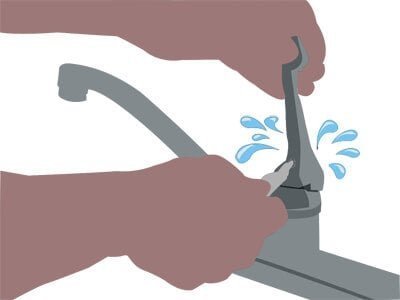
First, find where the kitchen faucet is leaking
Dry the faucet and the area under the sink completely with a towel. Run the water for a minute with the faucet on, then off, and watch closely. A flashlight and a dry paper towel help you trace drips back to their source. Match what you see to the table below.
| Where it leaks | Most likely cause | Typical fix |
|---|---|---|
| Spout drips when off | Worn cartridge, washer or seals | Replace cartridge or washers |
| Around the base | Worn O-rings or loose base | Replace O-rings; tighten base |
| At the swivel neck | Worn spout O-rings | Replace O-rings and grease |
| From the handle | Loose packing nut or worn cartridge | Tighten or replace cartridge |
| Under the sink | Loose supply line or sprayer hose | Tighten or replace line |
| From the pull-down head | Worn hose or head washer | Replace washer or hose |
Tools and parts you may need
- Adjustable wrench and slip-joint pliers
- Phillips and flathead screwdrivers, plus hex (Allen) keys
- Needle-nose pliers or an O-ring pick
- Replacement O-rings, washers or a cartridge that match your faucet
- Silicone faucet grease (never petroleum jelly, which can swell rubber)
- PTFE thread tape for threaded connections
- Towels, a flashlight and a container for small parts
Tip: Find your faucet’s brand and model before buying parts. Look for a logo on the faucet, check under the sink for a tag on the supply hoses, or search your original receipt. Bring the old part to the hardware store if you aren’t sure.
Kitchen faucet leaking at the base
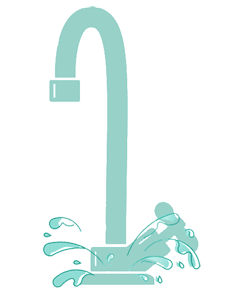
A kitchen faucet leaking at the base is usually caused by worn O-rings inside the spout or faucet body. On some faucets it can also mean the mounting nut under the sink has loosened.
- Turn off the hot and cold shutoff valves under the sink and open the faucet to release pressure.
- Close the drain or cover it with a towel so small parts can’t fall in.
- Remove the handle (look for a set screw under a decorative cap), then remove the retaining nut or clip that holds the spout.
- Lift the spout straight up and off the faucet body.
- Use needle-nose pliers or a pick to remove the old O-rings. Take them to the store to match size if needed.
- Coat the new O-rings with silicone faucet grease and roll them into the grooves.
- Reinstall the spout, retaining nut and handle.
- Turn the water back on slowly and check for leaks.
If the faucet rocks or water appears beneath the sink deck, tighten the mounting nut from below with a basin wrench.
Kitchen faucet leaking from the neck
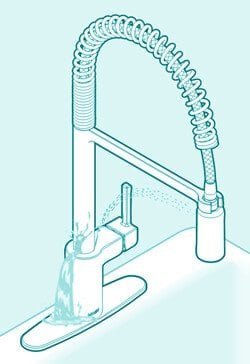
On swivel spouts, every swing of the spout rubs the O-rings at the neck. Over time they flatten and crack, letting water seep out when the faucet runs.
- Shut off the water and open the faucet.
- Unscrew the collar or coupling nut that holds the spout. If you use a wrench, wrap its jaws with tape to avoid scratching the finish.
- Pull the spout up and off and remove the old O-rings with a flathead screwdriver or pick.
- Clean the grooves, then install new O-rings coated in silicone faucet grease.
- Reattach the spout and collar, turn on the water and check for leaks while swinging the spout.
Kitchen faucet leaking from the spout
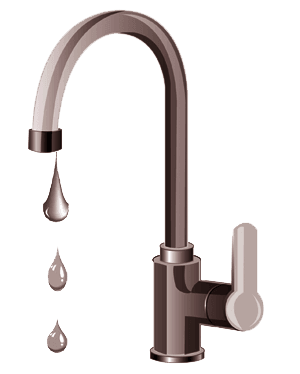
A kitchen faucet that keeps dripping from the spout after you turn it off usually has a worn internal seal. The fix depends on the faucet type:
- Cartridge faucets (common on Moen, Pfister and many others): replace the cartridge. See our single-handle cartridge faucet repair and double-handle cartridge guides.
- Ball faucets (older Delta single-handle models): replace the seats, springs and O-rings with a repair kit. See how to fix a ball faucet.
- Compression faucets (older two-handle designs): replace the rubber washers and, if pitted, the valve seats.
- Ceramic disc faucets: clean or replace the disc cartridge and its seals.
General steps: shut off the water, remove the handle, unscrew the bonnet nut or retaining clip, pull out the cartridge or stem, and install the matching replacement. Grease new seals, reassemble, and test.
Kitchen faucet leaking under the sink
Water in the cabinet is the leak to fix first because of the damage it causes. Check these points:
- Supply line connections: tighten the compression nuts a quarter turn. Replace the lines if they are kinked, bulging or more than about five years old.
- Pull-down sprayer hose: check the quick-connect fitting and look for cracks in the hose while running the sprayer.
- Shutoff valves: a valve that leaks at the stem may need its packing nut tightened or the valve replaced.
- Drain: make sure the water isn’t actually coming from the sink strainer or P-trap. See how to replace a kitchen sink strainer.
Kitchen faucet leaking from the handle
A leak around the handle usually means the cartridge seals are worn or the packing nut or bonnet nut has loosened. Shut off the water, remove the handle and tighten the nut slightly. If water still escapes, replace the cartridge or the stem O-rings.
Parts for fixing a kitchen faucet leaking
1. Danco 200-Piece Rubber O-Ring Kit
An assortment of common O-ring sizes for spouts, stems and cartridges.
- Pieces200
- Sizes12
- MaterialRubber
- UseSpouts, stems, cartridges
- BrandDanco
- StorageOrganized case
Pros
- Covers many common sizes
- Handy for future repairs
- Inexpensive
Cons
- May not include specialty sizes
- Match sizes carefully
2. Danco Waterproof Silicone Faucet Grease (88693)
A silicone grease that protects O-rings and makes reassembly easier.
- Size0.5 oz
- TypeSilicone
- UseO-rings, cartridges, stems
- Water resistantYes
- BrandDanco
- Model88693
Pros
- Safe on rubber seals
- Waterproof
- A little goes a long way
Cons
- Small tube
- Not a sealant for threads
3. Moen 1225 One-Handle Faucet Cartridge
The genuine replacement cartridge for many Moen single-handle kitchen faucets.
- FitsMany Moen single-handle faucets
- TypeCartridge
- MaterialBrass
- UseSpout and handle leaks
- BrandMoen
- Model1225
Pros
- Genuine Moen part
- Stops most spout drips
- Widely compatible with Moen
Cons
- Only for compatible Moen faucets
- Removal can need a puller tool
4. Millrose 70660 Monster Roll PTFE Thread Seal Tape
A long roll of PTFE tape for sealing threaded plumbing connections.
- Width1/2 in
- Length260 in
- TypePTFE
- UseThreaded connections
- BrandMillrose
- Model70660
Pros
- Long roll
- Easy to apply
- Inexpensive
Cons
- Not for compression fittings
- Wrap in the correct direction
Repair or replace your faucet?
Repair makes sense when the faucet is in good shape and parts are available. Replace it when the faucet is more than 15 years old, the body is cracked or badly corroded, parts are hard to find, or you’ve repaired it several times already. Our step-by-step guide to replacing a kitchen faucet walks through the job, and our best kitchen faucets guide can help you choose a new one.
How to prevent kitchen faucet leaks
- Don’t force handles closed; overtightening damages washers and cartridges.
- Clean the aerator every few months to keep pressure even. See how to clean a faucet aerator.
- Check under the sink every few months for moisture.
- Replace supply lines every five to ten years.
- If you have hard water, consider a softener to reduce mineral wear on seals.
Kitchen faucet leaking FAQs
Why is my kitchen faucet leaking when it’s turned off?
A faucet that drips when turned off usually has a worn cartridge, washer or valve seat. Replacing that part typically stops the drip.
Why is my kitchen faucet leaking from the base?
Leaks at the base are usually caused by worn O-rings inside the spout or a loose mounting nut. Replacing the O-rings fixes most base leaks.
Can a leaking kitchen faucet cause water damage?
Yes, especially leaks under the sink. They can damage the cabinet, subfloor and walls and encourage mold. Fix those leaks quickly.
How much does it cost to fix a kitchen faucet leak?
A DIY repair often costs only the price of O-rings, washers or a cartridge. A plumber adds labor, which varies by area.
Should I call a plumber for a leaking kitchen faucet?
Call a plumber if the shutoff valves won’t close, the pipes are corroded, the leak is inside the wall, or the repair doesn’t stop the leak.
What kind of grease should I use on faucet O-rings?
Use silicone faucet grease. Petroleum-based products can make rubber O-rings swell and fail.
Final thoughts
Most cases of a kitchen faucet leaking can be fixed in under an hour with the right part. Find the leak first, then replace the O-rings, cartridge or washers and check every connection under the sink. If the faucet is old or keeps leaking, replacement is often the smarter, longer-lasting fix.