Kitchen Bath Picks is reader-supported. When you buy through links on this page, we may earn an affiliate commission at no extra cost to you. Learn more.
In this guide
- Natural stone in your bathroom: types compared
- 1. Timeless elegance
- 2. Durability that lasts
- 3. Easier maintenance than you might think
- 4. A huge variety to choose from
- 5. A natural, long-lasting choice
- 6. Added resale value
- The trade-offs of natural stone in your bathroom
- Expert tips for using natural stone in your bathroom remodel
- Natural stone vs. stone-look porcelain
- Products to protect natural stone in your bathroom
- FAQs: natural stone in your bathroom
- Final thoughts
Few materials make a bathroom feel as substantial as real stone. A marble vanity top, a travertine floor or a slate shower wall has a depth and variation that printed porcelain can imitate but never quite match, because no two pieces of natural stone are the same. That’s why using natural stone in your bathroom remodel is one of the most reliable ways to add lasting value and character.
Stone isn’t the right choice for every bathroom or every budget, though. This guide covers the real benefits of natural stone in your bathroom, the trade-offs, the most popular types and how to care for it so it looks good for decades.
Quick answer: Using natural stone in your bathroom remodel adds timeless style, durability and resale appeal, and every slab or tile is unique. Granite and quartzite are the most durable; marble and travertine are elegant but softer and more prone to etching; slate offers natural slip resistance. Most natural stone is porous, so it needs sealing and pH-neutral cleaners to stay looking its best.
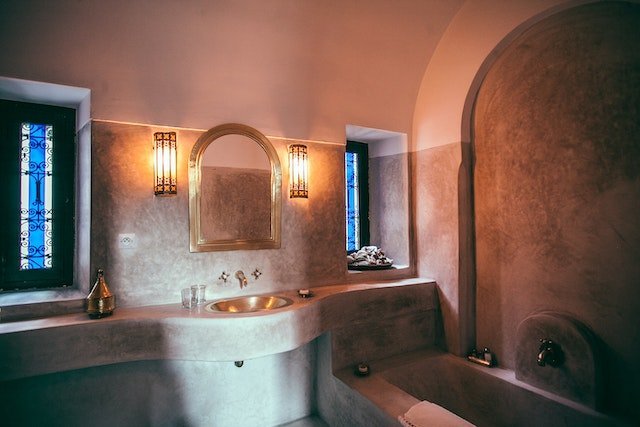
Natural stone in your bathroom: types compared
| Stone | Look | Durability | Upkeep | Best uses |
|---|---|---|---|---|
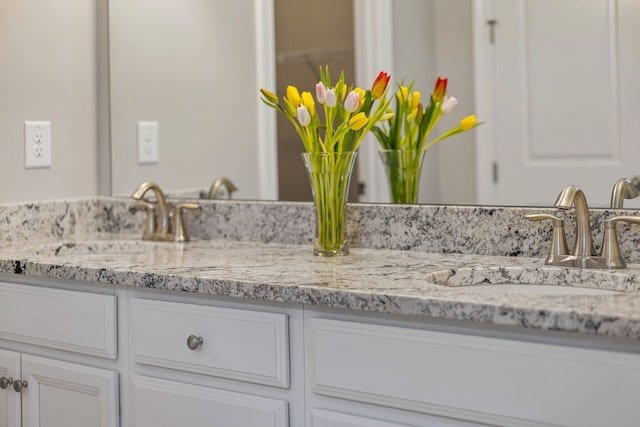
| Granite | Speckled, wide color range | Very high | Seal periodically | Vanity tops, floors |
| Quartzite | Marble-like veining | Very high | Seal periodically | Vanity tops, shower walls |
| Marble | Classic veining, luminous | Moderate; etches and scratches | Seal, avoid acids | Vanity tops, walls, accents |
| Travertine | Warm, earthy, pitted texture | Moderate | Seal; filled or honed finish | Floors, shower walls |
| Slate | Dark, natural cleft texture | High | Seal; can flake | Floors, shower floors |
| Limestone | Soft, uniform, muted tones | Moderate to low | Seal, gentle cleaning | Walls, low-traffic areas |
1. Timeless elegance
Natural stone has never really gone out of style. Marble has been used in bathhouses for thousands of years, and granite and travertine still feel current today. Because each slab is formed by natural processes, the veining and color shifts are one of a kind. Use stone on a vanity top, a feature wall or a shower floor and the whole room feels more custom.
2. Durability that lasts
Properly installed and maintained, stone surfaces can last for the life of the house. Granite and quartzite are especially hard and resist scratches and heat. Softer stones such as marble and limestone are still long-lasting but show wear more readily, which many homeowners consider part of their charm.
3. Easier maintenance than you might think
Sealed natural stone in your bathroom is easy to clean: wipe it with a soft cloth and a pH-neutral stone cleaner. Avoid vinegar, bleach and acidic or abrasive cleaners, which can etch and dull the surface. Reseal according to the sealer’s directions, often every one to three years for floors and showers. A quick water-drop test shows when it’s time: if water darkens the stone instead of beading, reseal.
4. A huge variety to choose from
From bright white marble to deep charcoal slate, there’s a natural stone for every style. Finishes change the look and feel too: polished stone is glossy and shows veining; honed is matte and less slippery; tumbled and brushed finishes have a softer, aged look. For floors and showers, choose honed, tumbled or textured finishes for better grip.
5. A natural, long-lasting choice
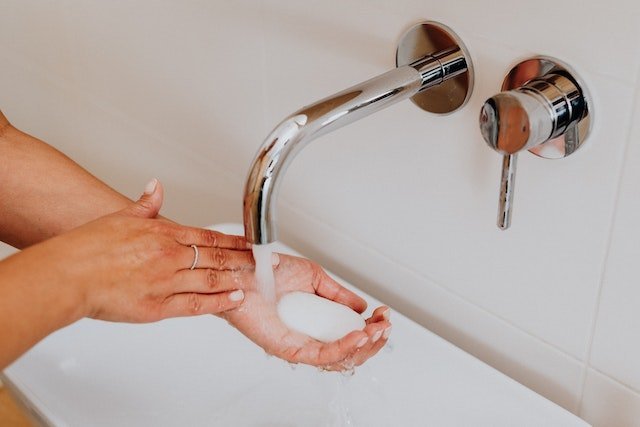
Natural stone is a natural material that, when it lasts for decades, avoids the waste of frequent replacement. Stone quarried closer to home has a smaller transportation footprint, and reclaimed stone is an option for some projects. Ask your supplier about origin and sourcing if sustainability is important to you.
6. Added resale value
Buyers often see natural stone as a premium finish. A well-designed stone vanity or shower can help a bathroom stand out in listings and may help support a higher asking price, especially in mid- to high-end homes.
The trade-offs of natural stone in your bathroom
- Cost: Stone and professional installation generally cost more than ceramic or porcelain tile.
- Porosity: Most stone absorbs liquids and must be sealed to resist staining and mold.
- Etching: Marble, travertine and limestone react with acids, including some cleaners and toiletries.
- Weight: Stone slabs are heavy, and floors and vanities must support them.
- Slipperiness: Polished stone can be slippery when wet; choose textured finishes for floors.
- Variation: Natural differences mean samples may not match the final slab; view slabs in person when you can.
Expert tips for using natural stone in your bathroom remodel
- Pick the right stone for each area. Use harder stones such as granite or quartzite on vanity tops and textured stones on wet floors.
- Hire experienced installers. Stone requires proper substrate, waterproofing and setting materials. See how to hire the right remodeling contractor.
- Seal before grouting and after installation as your installer recommends.
- Ventilate well. Run the exhaust fan to reduce humidity and help prevent mold in your bathroom.
- Use the right cleaners. pH-neutral stone cleaners protect the finish and the sealer.
- Squeegee shower walls to reduce water spots and soap scum.
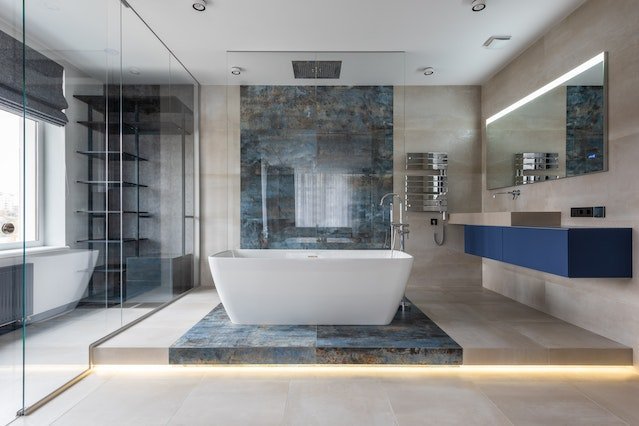
Considering marble underfoot? Read our guide to marble shower floors and see how to choose the right shower door to go with it.
Natural stone vs. stone-look porcelain
Stone-look porcelain has improved a lot, and it’s a fair alternative to weigh. Porcelain is denser, doesn’t need sealing and costs less to install, which makes it practical for busy family bathrooms and shower floors. Natural stone in your bathroom wins on depth, authenticity and the subtle variation from tile to tile, and it can be honed or refinished if it gets worn, whereas porcelain can’t.
Many designers mix the two: a real marble or quartzite vanity top where you’ll see and touch it every day, and porcelain on the shower floor and walls where water exposure is highest. It’s a smart way to get the look of stone where it matters most while keeping cost and maintenance in check.
Products to protect natural stone in your bathroom
1. Miracle Sealants 511 Impregnator Penetrating Sealer, Pint
A penetrating sealer that helps protect natural stone, tile and grout from water and oil-based stains.
- Size1 pint
- TypePenetrating (impregnating) sealer
- UseNatural stone, tile, grout
- FinishDoesn’t change the surface appearance
- BrandMiracle Sealants
Pros
- Trusted by tile pros
- Invisible protection
- Works on many surfaces
Cons
- Needs good ventilation when applying
- Follow cure time before use
Who it’s best for
Sealing stone floors, vanity tops, tile and grout throughout the bathroom.
Good to know before you buy
Apply with good ventilation and let it cure fully before using the space.
2. Black Diamond Stoneworks Natural Stone Shower Sealer
A water-based penetrating sealer designed for natural stone showers.
- TypePenetrating, water-based
- UseNatural stone showers and walls
- FinishNatural look
- BrandBlack Diamond Stoneworks
Pros
- Formulated for wet areas
- Water-based
- Easy to apply
Cons
- Reapply periodically
- Test on a small area first
Who it’s best for
Natural stone shower walls and floors.
Good to know before you buy
Test on a hidden spot first, and reseal as the stone begins to absorb water.
3. STONETECH Bulletproof Sealer, 1 Quart
A penetrating sealer for natural stone, tile and grout in high-moisture areas.
- Size1 quart
- TypePenetrating sealer
- UseStone, tile, grout
- FinishNatural, non-glossy
- BrandStoneTech
Pros
- Long-lasting protection
- Suitable for showers
- Covers large areas
Cons
- Higher cost
- Requires careful application
Who it’s best for
High-moisture areas that need durable stain protection.
Good to know before you buy
Careful application matters, so read the directions before starting.
4. Black Diamond Stoneworks Natural Stone Cleaner, 1 Gallon
A pH-neutral cleaner for limestone, travertine, granite, marble and tile.
- Size1 gallon
- UseLimestone, travertine, granite, tile
- TypepH-neutral cleaner
- BrandBlack Diamond Stoneworks
Pros
- Safe for sealed stone
- Large size
- No harsh acids
Cons
- Not a sealer
- Dilution may be needed for some uses
Who it’s best for
Routine cleaning of sealed stone and tile.
Good to know before you buy
It cleans but doesn’t replace sealing.
FAQs: natural stone in your bathroom
Is natural stone a good choice for a bathroom?
Yes, if it’s properly sealed and you choose the right stone and finish for each area.
Which natural stone is best for a bathroom floor?
Slate, honed or tumbled travertine and textured granite offer good durability and grip.
How often should I seal natural stone in my bathroom?
Often every one to three years, depending on the stone, use and sealer. Do a water-drop test.
Can I use vinegar on marble?
No. Vinegar and other acids etch marble, travertine and limestone. Use a pH-neutral stone cleaner.
Is natural stone slippery in showers?
Polished stone can be. Choose honed, tumbled or textured finishes and small mosaics for shower floors.
Does natural stone add value to a home?
It’s seen as a premium finish and can make a bathroom more appealing to buyers.
Final thoughts
Using natural stone in your bathroom remodel adds timeless style, durability and a one-of-a-kind look. Choose the right stone and finish for each area, hire experienced installers, seal it properly and clean it with pH-neutral products. With that care, natural stone in your bathroom will look beautiful for decades.