Kitchen Bath Picks is reader-supported. When you buy through links on this page, we may earn an affiliate commission at no extra cost to you. Learn more.
In this review
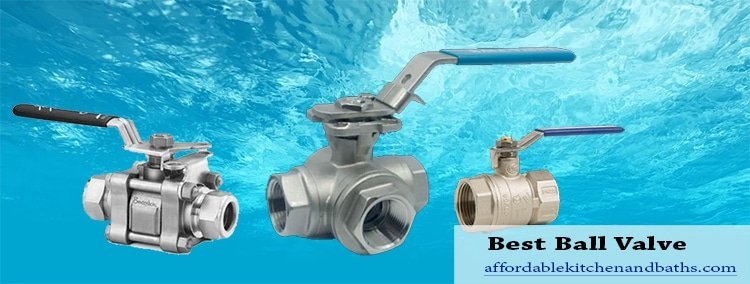
The best ball valve is the one you’ll be glad you installed the day a pipe bursts or a fixture needs replacing. A quarter turn of the handle shuts the water off instantly and completely, which is why ball valves have largely replaced old gate valves as main and fixture shut-offs. But ball valves vary in material, port size, connection type and pressure rating, and choosing the wrong one, or one that isn’t rated for drinking water, can cause real problems.
We rebuilt this guide for 2026 with valves currently sold on Amazon from Mueller, SharkBite, Dixon, XFITTING, Midwest Control, AIGO, HYDROSEAL and Homewerks. We compared body material, full vs. standard port, connection type (threaded, push-to-connect, PEX crimp, solvent weld), pressure and temperature ratings, potable-water certification and intended use. Here are our top picks, a comparison table, detailed reviews and a buying guide.
Our top picks at a glance
- Best overallMueller ProLine Full Port 3/4″600 PSI, CSA certified, full portCheck price
- Easiest installSharkBite 3/4″ Push-to-ConnectNo tools, lead-free brassCheck price
- Best for PEXXFITTING 1/2″ PEX Crimp (10-pack)NSF-61, potable and hydronicCheck price
- Best threaded valueDixon FBVG75 3/4″ FNPTForged brass, full portCheck price
- Best for pools & irrigationHYDROSEAL 1″ PVC True UnionFull port, serviceable unionCheck price
Best ball valves compared
Use this table to compare the best ball valve options. For drinking-water lines, always choose a valve that is certified lead-free or to NSF/ANSI 61.
| Valve | Best for | Connection | Port | Rating | Potable water | Buy |
|---|---|---|---|---|---|---|
| Mueller ProLine 3/4″ | Main and fixture shut-offs | Female NPT | Full | 600 PSI WOG | Check listing (NL model) | Check price |
| SharkBite 3/4″ | DIY repairs | Push-to-connect | Check listing | 250 PSI, 200°F | Yes, lead-free | Check price |
| XFITTING 1/2″ PEX | PEX systems | PEX-B crimp | Full | 400 PSI | Yes, NSF-61 | Check price |
| Dixon FBVG75 | Threaded lines | Female NPT | Full | Check listing | Check listing | Check price |
| AIGO 3-Way L-Port | Diverting flow | Female NPT | L-port | Check listing | Check listing | Check price |
| HYDROSEAL 1″ PVC | Pools, irrigation, aquariums | Solvent weld (socket) | Full | Check listing | Not intended for indoor potable | Check price |
| Midwest Control MBB-75 | Air, oil and industrial | Male x female NPT | Full | 600 PSI CWP | No | Check price |
| Homewerks Gas Ball Valve | Gas appliance shut-offs | Female thread | Check listing | Gas rated | No (gas use) | Check price |
| Stainless Shower Mini Valve | Showerhead shut-off | 1/2″ NPT male x female | Mini | Check listing | Check listing | Check price |
Ratings and certifications are taken from the manufacturers’ listings at the time of writing. Always confirm local plumbing code requirements, and use a licensed professional for gas work.
How we chose the best ball valves
We focused on well-known plumbing brands and on the specifications that matter for safety and longevity: forged brass or stainless bodies, full-port designs for unrestricted flow, blowout-proof stems, clear pressure and temperature ratings and, for drinking water, lead-free or NSF/ANSI 61 certification. We also matched each valve to the job it does best, because a great PVC irrigation valve is the wrong choice under a kitchen sink. We haven’t installed every valve ourselves, so our picks are research based. All were available on Amazon for US buyers when we last checked.
The best ball valves of 2026, reviewed
1. Mueller ProLine Full Port 3/4″ Ball Valve
A heavy-duty, CSA-certified brass valve with a full port and blowout-proof stem.
- Size3/4 in FPT
- Rating600 PSI WOG / 150 WSP
- Temperature-20 to 300°F
- PortFull
- StemBlowout-proof
- CertificationCSA (ASME B16.33/B16.44)
Pros
- Full port for maximum flow
- Blowout-proof stem and PTFE seats
- Rust-resistant handle with vinyl grip
Cons
- Threaded connections need sealant and wrenches
- Confirm the lead-free (NL) version for drinking water
Mueller’s ProLine is a professional-grade valve built for main water shut-offs and other critical lines. The full-port design means the opening is the same size as the pipe, so it doesn’t restrict flow, and the blowout-proof stem and PTFE seats provide long, leak-free service. It’s rated to 600 PSI WOG and certified by CSA to ASME standards. For drinking-water lines, choose the lead-free “NL” model number. It’s the best ball valve for permanent, threaded installations.
Who it’s best for
Main water shutoffs, water heater lines and any plumbing where a full-port, heavy-duty valve is worth it.
Good to know before you buy
Threaded connections need thread sealant or PTFE tape. Full port means no flow restriction, which helps whole-house pressure.
2. SharkBite 3/4″ Push-to-Connect Ball Valve
A lead-free brass valve that pushes onto pipe with no tools, solder or crimping.
- Size3/4 in
- ConnectionPush-to-connect
- Works withPEX, copper, CPVC, PE-RT, HDPE
- Rating250 PSI, 200°F
- MaterialLead-free DZR brass
- ToolsNone required
Pros
- Installs in seconds without tools
- Works with many pipe types
- Lead-free for drinking water
Cons
- More expensive than threaded valves
- Fittings must be fully seated to seal
SharkBite valves are the go-to for DIY repairs and emergencies. Cut the pipe square, deburr it, mark the insertion depth and push the valve on. Stainless teeth grip the pipe and an O-ring seals it. It works with PEX, copper, CPVC, PE-RT and SDR-9 HDPE, and it’s made of lead-free brass, rated to 250 PSI and 200°F. For quick fixes, it’s the best ball valve you can buy.
Who it’s best for
DIYers who need a quick, solder-free shutoff on PEX, copper or CPVC.
Good to know before you buy
Push-to-connect fittings cost more than threaded or crimp valves; cut pipe squarely and deburr it for a reliable seal.
3. XFITTING 1/2″ PEX Ball Valve (10-Pack)
Full-port brass PEX crimp valves certified for potable water and hydronic heating.
- Size1/2 in PEX-B
- ConnectionCrimp
- Rating400 PSI
- CertificationNSF-61, ASSE 1061
- UsePotable + hydronic
- Pack10
Pros
- Certified for drinking water
- Approved for use behind walls
- Great value in a 10-pack
Cons
- Requires a PEX crimp tool
- PEX-B crimp only
If you’re plumbing with PEX, XFITTING’s crimp ball valves are certified to NSF/ANSI 61 and ASSE 1061 for potable water and hydronic heating, and approved for use behind walls. They work with major PEX brands and come in a 10-pack, which is ideal for renovations with several fixture shut-offs.
Who it’s best for
PEX-B plumbing systems installed with crimp rings.
Good to know before you buy
You’ll need a PEX crimp tool. Make sure your pipe is PEX-B, not PEX-A expansion pipe.
4. Dixon FBVG75 3/4″ Brass Ball Valve
A forged brass, full-port inline valve with female NPT threads.
- Size3/4 in FNPT
- MaterialForged brass
- PortFull
- HandlePlastic-covered lever
- TypeInline
- BrandDixon
Pros
- Corrosion-resistant forged brass
- Full-port flow
- Simple, durable design
Cons
- Check potable-water rating
- Threaded install takes more work
Dixon’s FBVG75 is the best ball valve for threaded lines on a budget: a solid, no-nonsense brass valve with full-port flow and female NPT threads for joining two threaded pipes. Forged brass resists corrosion better than steel, and the plastic-covered lever is easy to grip. Check the listing for potable-water suitability before using it on drinking-water lines.
Who it’s best for
General threaded plumbing at a budget price.
Good to know before you buy
Check the pressure rating for your application; it’s ideal for standard residential water lines.
5. AIGO 3-Way L-Port Brass Ball Valve
A three-way L-port valve for diverting flow between two outlets.
- Type3-way L-port
- MaterialForged brass
- ConnectionFemale NPT
- HandleLever
- UseDiverting flow
- Series180SS
Pros
- Diverts water between two outlets
- Forged brass body
- Lever shows flow direction
Cons
- More complex than a 2-way valve
- Check ratings for your application
A three-way L-port valve lets you send flow from one inlet to either of two outlets, which is useful for switching between a water filter and bypass, or between two irrigation zones. AIGO’s forged brass valve uses a lever handle and female NPT threads, making it the best ball valve for diverting flow.
Who it’s best for
Diverting water between two outlets, such as irrigation zones or filtration systems.
Good to know before you buy
L-port valves divert flow; they don’t mix. Confirm the flow pattern before installing.
6. HYDROSEAL 1″ PVC True Union Ball Valve
A full-port PVC valve with true-union ends that can be removed for service.
- Size1 in
- MaterialPVC
- ConnectionSocket (glue-on)
- SealsEPDM O-rings, PTFE seats
- PortFull
- StandardASTM F1970
Pros
- True union lets you remove the valve without cutting pipe
- Full port
- Ready for an actuator
Cons
- Solvent-weld only
- Not for indoor hot-water lines
For pools, irrigation, aquariums and other PVC systems, HYDROSEAL’s true-union valve is the best ball valve choice. The union ends unscrew, so you can remove or service the valve without cutting the pipe, and EPDM O-rings and PTFE seats provide a long-lasting seal.
Who it’s best for
Pools, spas and irrigation with PVC pipe.
Good to know before you buy
PVC valves are for cold water only and are glued in, so plan the layout before cementing.
7. Midwest Control MBB-75
A heavy-duty forged brass valve for compressed air, oil and industrial lines, not drinking water.
- Size3/4 in NPT (M x F)
- Rating600 PSI CWP / 150 WSP
- MaterialForged brass
- PortFull
- ApprovalsUL, CSA, FM, CE
- Potable waterNot approved
Pros
- Male x female threads simplify some installs
- High pressure rating
- UL, CSA, FM approvals
Cons
- Not for potable water systems
- Industrial look
Midwest Control’s MBB-75 is a tough, full-port brass valve with male-by-female threads, useful for air compressors, workshops and other non-drinking-water lines. The manufacturer specifically states it is not for use in potable water systems, so don’t install it on your kitchen or bathroom water supply.
Who it’s best for
Compressed air and light industrial lines where UL and CSA approvals are needed.
Good to know before you buy
Male-to-female threads simplify connections to fittings already in place.
8. Homewerks Gas Ball Valve 1/2″
A one-piece forged brass valve designed for gas shut-offs.
- Size1/2 in
- UseGas
- Body1-piece forged brass
- ConnectionFemale thread
- InstallLicensed pro recommended
- BrandHomewerks
Pros
- Designed for gas service
- Durable one-piece body
- Simple quarter-turn shut-off
Cons
- Gas work should be done by a licensed professional
- Not for water lines
Gas ranges, dryers and water heaters need an accessible gas shut-off valve. Homewerks makes a one-piece forged brass valve designed for gas service. Gas connections are dangerous if done incorrectly, so have a licensed professional install it and test for leaks.
Who it’s best for
Gas stoves, dryers and grills when paired with professional installation.
Good to know before you buy
Gas work can be dangerous and is regulated; hire a licensed professional and leak-test with soapy water.
9. 304 Stainless Mini Ball Valve
A small stainless valve that fits between the shower arm and showerhead.
- Size1/2 in NPT
- Material304 stainless steel
- UseShowerhead shut-off
- StemBlowout-proof
- HandleStainless lever
- Also forRVs, water saving
Pros
- Pause water while you lather to save water
- Stainless resists corrosion
- Fits standard shower arms
Cons
- Changes the look of the showerhead
- Generic brand
A mini ball valve between the shower arm and showerhead lets you pause the water while you shampoo, a popular water saver in RVs and homes. This one is 304 stainless steel with a blowout-proof stem and standard 1/2-inch threads.
Who it’s best for
Adding a convenient on/off at the showerhead to save water while lathering.
Good to know before you buy
Install it between the shower arm and showerhead with PTFE tape.
Buying guide: how to choose the best ball valve
The best ball valve for your project depends on what flows through the pipe, the pipe material, how you’ll connect it and the pressure involved.

Why ball valves beat gate valves
A ball valve uses a rotating ball with a hole through it. A quarter turn lines the hole up with the pipe (open) or turns it sideways (closed). That makes it fast, reliable and easy to see at a glance whether it’s open. Older gate valves take many turns, can seize or fail to close fully, and are a common weak point in older homes.
Full port vs. standard port
A full-port valve has an opening the same size as the pipe, so it doesn’t restrict flow. Choose full port for main shut-offs and anywhere flow matters. A standard-port valve has a slightly smaller opening, which is fine for most fixture branches.
Choose the right connection
- Threaded (NPT): traditional and very durable; needs thread sealant and wrenches.
- Push-to-connect: fastest for DIY and repairs; works with several pipe types.
- PEX crimp or expansion: best for PEX systems; requires the right tool.
- Sweat (solder): for copper pipe; requires soldering skills.
- Solvent weld: for PVC systems such as pools and irrigation.
Drinking water needs lead-free certification
For any valve on a drinking-water line, choose one that’s lead-free and preferably certified to NSF/ANSI 61 or 372. In the US, plumbing products for potable water must meet federal lead-free requirements. Industrial valves, like the Midwest Control MBB-75, are not approved for drinking water.
Check pressure and temperature ratings
Household water pressure is typically 40 to 80 PSI, so most quality valves have plenty of margin. Check the temperature rating for hot-water lines; brass valves are rated well above household hot-water temperatures, while PVC is for cold water only.
Gas valves are a different category
Never use a water valve for gas or vice versa. Gas valves must be specifically rated for gas, and gas work should be done by a licensed professional in line with local codes.
How to replace a shut-off with a ball valve
- Turn off the main water and open a low faucet to drain the line.
- Cut or unthread the old valve, keeping the pipe end clean, square and deburred.
- Prepare the connection: wrap PTFE tape or apply pipe dope on threaded joints, mark insertion depth for push-to-connect fittings, or position the crimp ring for PEX.
- Install the valve with the handle where you can reach and turn it easily.
- Close the new valve, restore water and check for leaks, then open the valve and check again.
Exercise your shut-off valves once or twice a year by turning them off and on, so they don’t seize when you need them. While you’re working under the sink, check your drain and faucet too; see our guides to the best sink strainer and the best kitchen faucets.
Best ball valve FAQs
What is the best type of ball valve for a main water shut-off?
A full-port, lead-free brass ball valve sized to match your main line, often 3/4 or 1 inch, is the best choice. It shuts off quickly and does not restrict flow.
Are push-to-connect ball valves reliable?
Yes, when installed correctly on properly prepared pipe. Cut the pipe square, deburr it, mark the insertion depth and push the fitting fully on. They are widely used for repairs and new work where codes allow.
What does full port mean on a ball valve?
A full-port ball valve has an internal opening the same size as the pipe, so water flows without restriction. Standard-port valves have a slightly smaller opening.
Can I use any brass ball valve for drinking water?
No. Use valves that are lead-free and ideally certified to NSF/ANSI 61 or 372. Some industrial brass valves are specifically not approved for potable water.
How long do ball valves last?
Quality brass ball valves often last decades. Operating them once or twice a year helps prevent the ball and seats from seizing.
What is the difference between a ball valve and a gate valve?
A ball valve opens and closes with a quarter turn and seals reliably. A gate valve uses a sliding gate that takes many turns and is more prone to sticking or not sealing fully over time.
Our verdict
The Mueller ProLine full-port valve is the best ball valve for permanent, threaded shut-offs; choose the lead-free NL version for drinking water. For fast DIY repairs, the SharkBite push-to-connect valve is the easiest choice, and XFITTING’s certified PEX valves are ideal for PEX systems. Use the HYDROSEAL true-union valve for pools and irrigation, and reserve industrial and gas valves for their intended uses.
Match the valve to the pipe and the job, insist on lead-free valves for drinking water, and you’ll have reliable shut-offs for decades.