Kitchen Bath Picks is reader-supported. When you buy through links on this page, we may earn an affiliate commission at no extra cost to you. Learn more.
In this guide
- Before comparing water flosser vs string floss: signs you're not cleaning enough
- Water flosser vs string floss: side by side
- Water flosser vs string floss: benefits of a water flosser
- Water flosser vs string floss: benefits of string floss
- Water flosser vs string floss: how to choose
- How to use a water flosser correctly
- How to floss correctly with string floss
- Water flosser vs string floss: products worth considering
- Water flosser vs string floss FAQs
- Final thoughts
Brushing cleans only part of each tooth. The tight spaces between teeth and just under the gumline are where plaque hides, which is why dentists recommend cleaning between your teeth every day. The question many people ask is whether a water flosser can replace traditional string floss, or whether one is clearly better. The honest answer: both can work well, and the best choice is the one you’ll actually use correctly every day.
This 2026 guide compares water flosser vs string floss, explains who benefits most from each, how to use them properly and what to consider before you buy.
Health note: This article is general information, not dental advice. Ask your dentist or hygienist which interdental cleaning method is best for your teeth, gums and any dental work you have, especially if you have gum disease, implants, braces or bleeding gums.
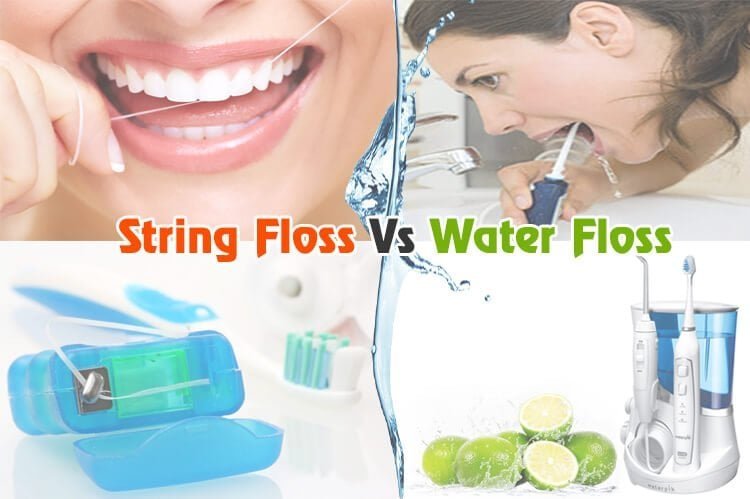
Quick answer: String floss physically scrapes plaque off tooth surfaces and is inexpensive and portable. A water flosser uses a pulsating stream of water to flush plaque and food from between teeth and below the gumline, and it’s easier for people with braces, implants, bridges, arthritis or sensitive gums. In the water flosser vs string floss comparison, many dental professionals consider both effective when used daily and correctly, and some people use both.

Before comparing water flosser vs string floss: signs you’re not cleaning enough
- Gums that bleed when you brush or floss
- Red, swollen or tender gums
- Persistent bad breath
- Food frequently stuck between teeth
- Plaque or tartar buildup along the gumline
These can be signs of gum inflammation (gingivitis). Daily interdental cleaning and regular dental checkups help keep it from progressing. See your dentist if symptoms persist.
Water flosser vs string floss: side by side
| Water flosser | String floss | |
|---|---|---|
| How it works | Pulsating water stream flushes debris and plaque | Floss scrapes plaque from tooth surfaces |
| Ease of use | Easy, especially with limited dexterity | Takes technique and practice |
| Braces, bridges, implants | Excellent; reaches around hardware | Difficult without threaders |
| Gentleness | Adjustable pressure; gentle on sensitive gums | Can irritate if used roughly |
| Cost | Higher upfront; replacement tips | Very low |
| Portability | Countertop units need an outlet; cordless options exist | Fits in a pocket |
| Time | About 1 minute | A few minutes |
| Mess | Can splash while learning | Minimal |
Water flosser vs string floss: benefits of a water flosser
- Easier to use: great for people with arthritis, limited hand mobility or a strong gag reflex.
- Ideal around dental work: cleans around braces, bridges, crowns and implants where floss is hard to thread.
- Gentle on gums: adjustable pressure settings help people with sensitive or bleeding gums.
- Reaches below the gumline: the water stream can flush pockets that are hard to reach.
- Encourages daily use: many people find it more pleasant, so they stick with it.
Water flosser vs string floss: benefits of string floss
- Removes sticky plaque by scraping: wrapping floss in a C-shape around each tooth physically wipes plaque away.
- Inexpensive and portable: no power, water or storage space needed.
- Works in very tight contacts: thin or tape floss slides between closely spaced teeth.
- Widely recommended: a long-standing, well-understood method.
Water flosser vs string floss: how to choose
| If you… | Consider |
|---|---|
| Have braces, bridges or implants | Water flosser (or both) |
| Have arthritis or limited dexterity | Water flosser |
| Have sensitive or bleeding gums | Water flosser on a low setting, plus dentist advice |
| Want the lowest cost and portability | String floss |
| Have very tight teeth | String floss or tape floss |
| Want the most thorough routine | Both: floss to scrape, water flosser to flush |
How to use a water flosser correctly
Whichever side of the water flosser vs string floss question you land on, technique makes the difference.
- Fill the reservoir with lukewarm water.
- Start on the lowest pressure setting and increase gradually over time.
- Lean over the sink, place the tip in your mouth and close your lips partly to avoid splashing.
- Aim the tip at the gumline at about a 90-degree angle.
- Glide along the gumline, pausing briefly between each tooth, inside and outside.
- Clean the tip and empty the reservoir after use.
If your flosser seems weak, see what to do when pressure is low in your water flosser.
How to floss correctly with string floss
- Use about 18 inches of floss, winding most around your middle fingers.
- Guide it gently between teeth with a back-and-forth motion; don’t snap it into the gums.
- Curve it into a C-shape around each tooth and slide it gently under the gumline.
- Move it up and down a few times, then use a fresh section for the next tooth.
Water flosser vs string floss: products worth considering
1. Waterpik Aquarius Countertop Water Flosser
A full-featured countertop water flosser with 10 pressure settings and 7 tips.
- TypeCountertop
- Settings10 pressure levels
- Tips7 included
- Reservoir90+ seconds of use
- PowerPlug-in
- BrandWaterpik
Pros
- Powerful and adjustable
- Large reservoir
- Lots of tips for braces and implants
Cons
- Needs counter space and an outlet
- Can splash while learning
Who it’s best for
Families and anyone with braces, implants or bridges who wants maximum power and tip choices.
Good to know before you buy
It needs counter space near an outlet. Start on a low setting and lean over the sink while you learn.
2. Waterpik ION Rechargeable Water Flosser
A compact rechargeable flosser with countertop-level performance and no cord.
- TypeRechargeable compact
- Settings10
- Tips7 included
- PowerRechargeable battery
- Outlet neededOnly for charging
- BrandWaterpik
Pros
- No cord clutter
- Full performance
- Compact
Cons
- Higher price
- Charge regularly
Who it’s best for
Small bathrooms and anyone who wants countertop-level performance without a cord.
Good to know before you buy
Charge it regularly. The rechargeable base costs more than corded models.
3. Waterpik Cordless Advanced Water Flosser
A portable cordless flosser with a rotating tip, ideal for travel and small bathrooms.
- TypeCordless handheld
- Tip360-degree rotating
- PowerRechargeable
- VoltageGlobal (travel friendly)
- UseSmall spaces, travel
- BrandWaterpik
Pros
- Portable
- Great for travel
- Easy to use in the shower
Cons
- Smaller reservoir
- Fewer settings than countertop models
Who it’s best for
Travelers, dorms and small bathrooms; it can even be used in the shower.
Good to know before you buy
The reservoir is smaller, so you may need to refill once per session.
4. Oral-B Glide Pro-Health Deep Clean Floss
A shred-resistant floss that slides easily between tight teeth.
- Length40 m per pack
- Packs3 (pack of 2)
- FlavorCool mint
- TypeShred-resistant
- UseDaily flossing
- BrandOral-B
Pros
- Slides easily
- Shred resistant
- Inexpensive and portable
Cons
- Requires technique
- Can be tough for limited dexterity
Who it’s best for
Anyone who wants an inexpensive, portable way to clean tight spaces between teeth.
Good to know before you buy
Technique matters: curve the floss around each tooth and use a fresh section for each space.
5. Waterpik Precision Replacement Tips JT-450E
Genuine Waterpik replacement tips for everyday water flossing.
- Count2 tips
- TypeClassic jet / precision
- FitsMost Waterpik water flossers (check model)
- ReplaceAbout every 3 to 6 months
- BrandWaterpik
- ModelJT-450E
Pros
- Genuine parts
- Easy to swap
- Keeps performance strong
Cons
- Check compatibility
- Not for every model
Compare more models in our best water flosser guide.
Who it’s best for
Waterpik owners whose tips are worn, cracked or more than six months old.
Good to know before you buy
Confirm the tip is compatible with your specific model before ordering.
Water flosser vs string floss FAQs
Is a water flosser as good as string floss?
For many people, a water flosser used daily is an effective alternative, and it’s often easier to use. String floss is better at scraping sticky plaque from tight contacts. Ask your dentist which is right for you.
Can I use a water flosser instead of flossing?
Many people do, especially those with braces or implants. Some dentists recommend using both for the most thorough clean.
Should I floss or brush first?
Either order works; many dental professionals suggest cleaning between teeth first so fluoride toothpaste can reach those areas when you brush.
Is a water flosser good for braces?
Yes. Water flossers clean around brackets and wires much more easily than string floss.
How often should I replace water flosser tips?
Usually every three to six months, or sooner if worn, following the manufacturer’s guidance.
Why do my gums bleed when I water floss?
Gums often bleed at first if they’re inflamed; bleeding usually decreases with consistent daily cleaning. See your dentist if it continues.
Final thoughts
In the water flosser vs string floss debate, there’s no single winner. String floss is cheap, portable and excellent at scraping plaque; a water flosser is easier, gentler and ideal around braces, bridges and implants. The most important thing is cleaning between your teeth every day, using whichever method, or combination, you’ll stick with, and following your dentist’s advice.