Kitchen Bath Picks is reader-supported. When you buy through links on this page, we may earn an affiliate commission at no extra cost to you. Learn more.
In this guide
- Why choose an automatic soap dispenser?
- The latest automatic soap dispenser design trends
- How to choose an automatic soap dispenser
- Automatic soap dispensers worth considering
- Countertop vs. wall-mounted vs. deck-mounted dispensers
- Is an automatic soap dispenser worth the price?
- Where to use an automatic soap dispenser
- How to care for an automatic soap dispenser
- Automatic soap dispenser FAQs
- Final thoughts
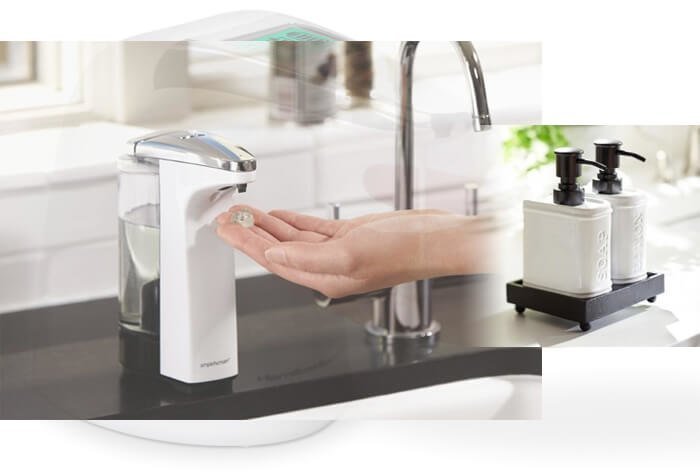
An automatic soap dispenser used to be something you only saw in airports and restaurant restrooms. Today it’s one of the easiest upgrades for a home kitchen or bathroom: a sensor reads your hand, a measured amount of soap lands in your palm, and you never touch a sticky pump with greasy or raw-chicken fingers again. Designs have come a long way too. Modern dispensers are rechargeable, waterproof, finished to match your faucet and smart enough to give you just the right amount of soap.
This 2026 guide covers the latest design trends for the automatic soap dispenser, what features matter, how to choose one for your kitchen or bathroom and a few current models worth considering.
Quick take: The biggest trends are rechargeable batteries instead of AAs, adjustable or variable dispensing, foaming options, waterproof designs, finishes that match faucets (brushed nickel, matte black, stainless) and wall-mounted models that free up counter space. For most homes, a rechargeable countertop dispenser with adjustable output is the best place to start.

Why choose an automatic soap dispenser?
- Hygiene: no touching the pump means fewer germs and no grime on the dispenser.
- Less waste: measured doses use less soap than squeezing a bottle.
- Cleaner counters: no drips or soap rings around the base.
- Convenience: great when your hands are full of dough, paint or garden dirt.
- Accessibility: easier for kids, older adults and anyone with limited grip strength.
Good handwashing technique matters more than the dispenser itself. Researchers have even found that comfortable water temperatures clean as well as hot water, as CBS News reported, so the real goal is making handwashing quick and easy enough that everyone does it properly.
The latest automatic soap dispenser design trends
1. Rechargeable batteries
The most noticeable shift is away from AA batteries. Many new dispensers charge through USB-C or a magnetic charging puck and run for weeks or months per charge. That means no battery swaps and less waste.
2. Variable and adjustable dispensing
Instead of one fixed squirt, newer dispensers let you choose several dose levels, or vary the amount based on how close your hand is to the sensor. You get a small dab for a quick rinse and more for greasy hands or dishes.
3. Foam and gel options
Foaming dispensers have moved from commercial restrooms into homes. Foam spreads easily, rinses quickly and uses less soap per wash. Some dispensers handle both liquid soap and gel, and a few support sanitizer or dish soap.
4. Faucet-matching finishes
Dispensers now come in brushed nickel, polished chrome, stainless steel, matte black and even brass tones, so they coordinate with faucets and hardware rather than looking like a plastic gadget. Stainless steel finishes that resist fingerprints and water spots are especially popular.
5. Waterproof, easy-clean designs
Higher water-resistance ratings let you rinse the dispenser under the tap. Smooth, seamless housings, no-drip valves and wide refill openings make them easier to keep clean.
6. Wall-mounted and space-saving designs
Wall-mounted automatic dispensers keep counters and backsplashes clear, while slim countertop models fit beside the faucet without crowding the sink. For a built-in look without batteries, many homeowners also choose deck-mount pump dispensers installed through the sink.
7. Transparent windows and refill indicators
Clear windows or level indicators show when it’s time to refill, so you’re not caught with an empty dispenser. Larger capacities of 12 to 17 ounces or more also mean fewer refills.
8. Faster, more precise sensors
Modern infrared sensors respond in a fraction of a second and have defined trigger zones, so they don’t fire when you set a sponge down next to them.
How to choose an automatic soap dispenser
| Feature | What to look for |
|---|---|
| Power | Rechargeable (USB-C or magnetic) for convenience; AA batteries for simplicity |
| Soap type | Liquid, gel or foam; check what the dispenser supports |
| Capacity | 8 to 12 oz for bathrooms; 12 to 17 oz or more for kitchens |
| Output | Adjustable or variable dose settings |
| Water resistance | Rinse-safe or rated for splashes |
| Finish | Match your faucet: stainless, nickel, chrome or matte black |
| Mounting | Countertop for flexibility; wall-mount to save space |
Tip: Use the soap the dispenser is designed for. Thick liquid soap can clog a foaming pump, and homemade or watered-down soap may not foam properly or may leak.
Automatic soap dispensers worth considering
1. simplehuman Liquid Sensor Pump, 9 oz (Rechargeable)
A rechargeable stainless steel sensor pump with variable dispensing.
- Capacity9 oz
- PowerRechargeable, magnetic charging
- Charge lifeUp to about 3 months
- DispensingVariable by hand distance
- Water resistanceIP67
- Brandsimplehuman
Pros
- No batteries to replace
- Precise, fast sensor
- Waterproof, fingerprint-resistant
Cons
- Higher price
- Smaller capacity than some
2. simplehuman 8 oz Touch-Free Sensor Soap Pump
A proven touch-free soap pump with a no-drip valve and fast 0.2-second dispensing.
- Capacity8 oz
- PowerBatteries
- Speed0.2-second dispense
- ValveNo-drip silicone
- FinishBrushed nickel
- Brandsimplehuman
Pros
- Fast and reliable
- No-drip valve
- Matches nickel fixtures
Cons
- Uses batteries
- Fixed dose
3. Secura 17 oz Automatic Liquid Soap Dispenser
A large-capacity touchless dispenser with adjustable volume that mounts on a wall or sits on a counter.
- Capacity17 oz
- Power4 AA batteries (not included)
- VolumeAdjustable, about 0.03 to 0.19 oz
- MountCountertop or wall
- FinishChrome and black, clear tank
- BrandSecura
Pros
- Large capacity
- Adjustable dose
- Clear tank shows level
Cons
- Battery-powered
- Plastic housing
4. AIKE Automatic Foam Soap Dispenser 33.8 oz
A large wall-mounted foaming dispenser with five dose levels.
- Capacity33.8 oz
- Soap typeFoaming
- MountWall (screw-mounted)
- Power4 AA batteries (not included)
- Levels5 adjustable
- FinishMatte black
Pros
- Huge capacity
- Saves counter space
- Adjustable foam output
Cons
- Requires drilling
- Works best with ready-made foaming soap
Countertop vs. wall-mounted vs. deck-mounted dispensers
| Style | Best for | Watch out for |
|---|---|---|
| Countertop automatic | Renters, quick upgrades, moving between rooms | Takes up counter space; needs charging or batteries |
| Wall-mounted automatic | Family bathrooms, laundry rooms, garages | Requires drilling; plan placement over the sink |
| Deck-mounted pump | A built-in look with no batteries | Manual pump; needs a spare sink or counter hole |
If you’re remodeling, think about where hands naturally go. A countertop automatic soap dispenser should sit within easy reach of the faucet but far enough from the spout that splashing doesn’t trigger the sensor. Wall-mounted units work best centered over the sink at a height where drips land in the basin, not on the counter.
Is an automatic soap dispenser worth the price?
Basic battery-powered models are inexpensive, while premium stainless rechargeable dispensers cost more. The premium usually buys a faster, more accurate sensor, a no-drip valve, better water resistance and a finish that matches high-end faucets. Because measured doses reduce soap waste, a good dispenser can partly pay for itself over time, especially in busy kitchens. Whatever you spend, look for a solid warranty and replaceable parts, and avoid models with vague specifications or no stated water resistance.
Where to use an automatic soap dispenser
- Kitchen sink: ideal for hand soap or dish soap while cooking. Choose a larger capacity and a finish that matches the faucet. Pair it with a touchless kitchen faucet for a fully hands-free sink.
- Bathroom vanity: a compact, rinse-safe model keeps the counter neat.
- Laundry room or garage: a wall-mounted foam dispenser handles messy hands.
- Kids’ bathroom: fixed doses prevent soap waste and make handwashing fun.
Prefer a built-in look? See our guide to the best deck mount soap dispenser, which installs through your sink or countertop.
How to care for an automatic soap dispenser
Wipe the housing and sensor window regularly so soap residue doesn’t block the sensor. Clean the nozzle with warm water if it starts to clog, and run warm water through the pump when switching soap types. Charge or replace batteries before they run completely flat, and follow the manufacturer’s guidance on which soaps to use.
Automatic soap dispenser FAQs
Are automatic soap dispensers worth it?
For many households, yes. They’re more hygienic, reduce soap waste and keep counters cleaner, especially in the kitchen.
Can I use any soap in an automatic soap dispenser?
Not always. Liquid dispensers need liquid soap of the right thickness, and foaming dispensers work best with ready-made foaming soap. Check the manual.
How long do the batteries last?
It depends on use. Rechargeable models often last weeks to months per charge; AA-powered models can last months.
Can I put dish soap in an automatic soap dispenser?
Many kitchen dispensers handle dish soap, but very thick formulas may need to be diluted slightly if the manufacturer allows it.
Why does my automatic soap dispenser keep dispensing?
The sensor may be dirty, wet or picking up reflections. Clean and dry the sensor window and move the dispenser away from shiny surfaces.
Is foam soap better than liquid?
Foam spreads easily and uses less soap per wash. Liquid soap gives a richer lather. Both clean well when you wash for at least 20 seconds.
Final thoughts
The modern automatic soap dispenser is rechargeable, adjustable, waterproof and designed to match your faucet. For most homes, a rechargeable countertop model is the easiest upgrade, while wall-mounted foam dispensers suit busy family bathrooms and utility spaces. Pick the soap type, capacity and finish that fit your space, and you’ll make handwashing quicker and cleaner for everyone.